“Lioness”. Flash Fiction

By Scott Rye

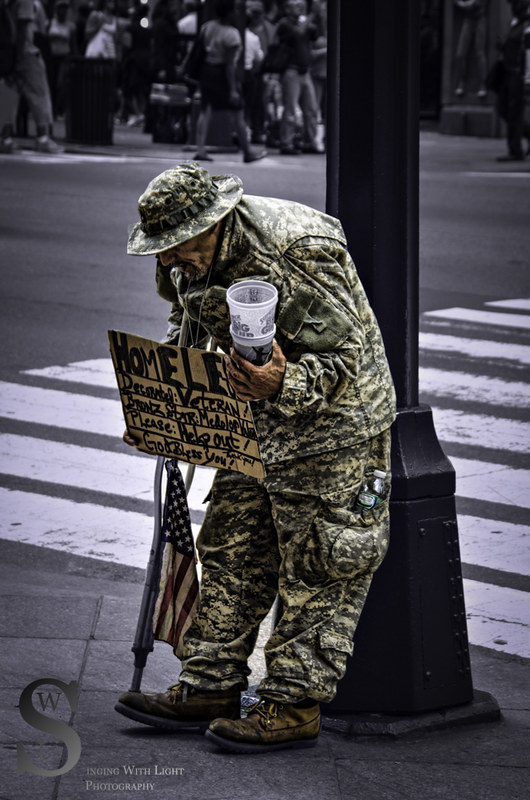
It wasn’t so much that Betty Lynn Campbell was pretty. She wasn’t. But there was something about her. On her best days, she bore a slight resemblance to a young Meryl Streep. Probably the Polish genes inherited from her mother. No, Betty Lynn wasn’t pretty. What she was, though, was a dude magnet. She was never going to be Homecoming Queen, but she was popular with the football players. Slut? Whore? Easy? Nobody ever used those words, exactly, when describing Betty Lynn. “Animal magnetism”, maybe. That’s what she had, they said. And it was true that she seemed to exude some sort of literal magnetism: Betty Lynn was unable to wear a watch because it would stop working within a day or two of putting it on. Doctors were at a loss to explain the phenomenon…

Read the full story here

Book Review: “The European Art Market and the First World War. Art, Capital, and the Decline of the Collecting Class, 1910-1925” by Maddalena Alvi, Cambridge, Cambridge University Press, 2025

By Gianluca Cinelli

The relationship between art and the First World War is often looked at by focusing on how the conflict encouraged the emergence of novel and original subjects and styles, both in literature and the arts. However, the aesthetic aspects only reveal one aspect of the relationship between armed conflicts and artistic activity. Maddalena Alvi, a young scholar at the University of Manchester, approached this topic from a different perspective. Instead of considering how the conflict affected the poetics and creativity of European artists, Alvi focuses on the art market, thus shifting the axis of the investigation to the field of cultural economy. This phrase means that culture, including art and its market, is part of the economic life of societies, and as such, it played a paramount role in the war economy between 1914 and 1918. Alvi’s book, therefore, focuses on the cultural and ideological implications of trading art in Europe between 1910 and 1925.

Read the full text here

The Legacy of the Second World War in the Memory of Italian Americans

Memo-AmIt Oral History Project

The Memo-AmIt project, realised by Dr Gianluca Cinelli and Dr Patrizia Piredda as a part of the MemoGen Project with the support of the Ragusa Foundation (New York), is collecting video interviews with Italian Americans born between 1965 and 1985, to understand how the legacy of the conflict has influenced the identity and self-perception of the Italian American community, how it has imprinted the narrative of the war within families and smaller communities, and how it has contributed to reshaping the perception of Italy in post-war America.

Italian American soldiers played a fundamental role in transforming the image of Italians in the United States. In addition, many Italian Americans could reconnect with their ancestral origins by fighting in Italy. Finally, the direct involvement of the second-generation Americans in the Vietnam War influenced the connection between the third generation and the Second World War.

People born approximately between 1965 and 1985 who identify as Italian Americans and want to participate as interviewees can visit the website of the Memo-AmIt project and get in touch with Dr Gianluca Cinelli (giancin77@yahoo.it) for further information.

The corpus of video interviews will constitute a relevant source for understanding Italian-American relations from 1945 to the present day. The interviews will explore themes such as the importance of grandparents’ legacy for personal development and moral education, immigration, integration, multiculturalism, ethical values, the role of education in the development of critical thinking, the damaging effects of propaganda and fake news, the perception of Italy and the legacy of other American wars (Korea, Vietnam, Iraq, and Afghanistan) and the terrorist attacks of September 11, 2001. Finally, the concepts of freedom and democracy as bridges between the past and present are explored.

Today, in the face of the international crisis that the Western world is experiencing, oral history focused on the topicality of the Second World War and its legacy can provide valuable insights to understand and re-evaluate the point of view of Italian Americans, their self-perception and the meaning of Italy in their cultural imagination. Recording video interviews will allow us to investigate a target group that scholars have not considered in previous oral history projects regarding the legacy of the Second World War. Memo-AmIt, therefore, represents an important step in the exploration of the cultural ties between Americans and Italians in relation to one of the major historical events of the twentieth century, which shaped the relations between the two countries and their cultures for decades.
“Shared in Shards”:  Fragments from the War in Ukraine.

Review of Oksana Maksymchuk’s Still City, Diary of an Invasion

By Sarah Montin

Are they there yet?” is the question haunting Oksana Maksymchuk’s debut collection in English which chronicles the period just before and after Russia’s invasion of Ukraine in February 2022. Exiled in the US since the 1990’s, author of two poetry collections in Ukrainian and the celebrated co-translator of Apricots of Donbas by Lyuba Yakimchuk and The Voices of Babyn Yar by Marianna Kiyanovska, Oksana Maksymchuk returned to her hometown of Lviv just before Russia launched its “special operation” on 24th February 2022. Poised for war, Maksymchuk’s poetic Diary of an Invasion is frozen in the expectation of violence, hushed in the anxiogenic stillness of “things to come/waiting to be unwrapped” (When a Missile Finds a Home).

“Snow is a strange white word” wrote British war poet Isaac Rosenberg as he learned of Great Britain’s entrance in the war in August 1914 and witnessed the winter of the world closing in: “Ice and frost and snow / From earth to sky / This summer land does know / No man knows why” (On Receiving the First News of the War).

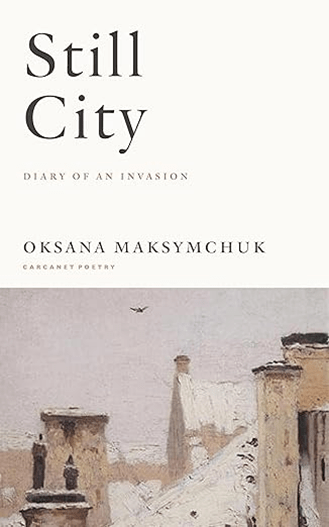
More than a hundred years later, the cover of Still City, featuring snow-laden roofs against a white sky and a drone-like bird frozen mid-air suggests in the same manner the looming Homeric “white ruin” of war under the false serenity of snow. It also materializes the force lines that shape the collection (and perhaps war poetry in general) – namely the symbolic and formal dialectic between stillness and movement, expansion and concentration, abstraction and figuration…

Continue reading the review here

The Legacy of the Vietnam War in a Poem: “Market Day” by Karly Randolph Pitman

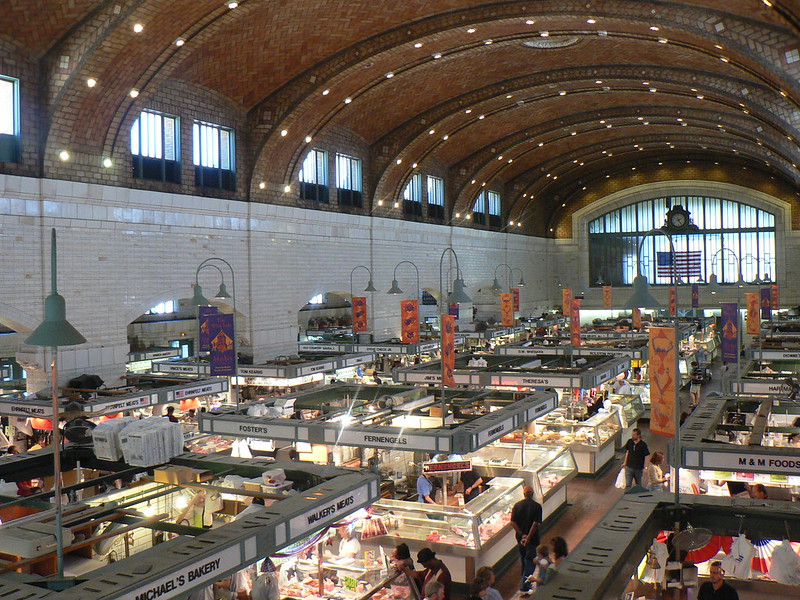
When I visit my parents in the Cleveland suburbs, my 81-year-old father and I go to the West Side Market. The market is a Cleveland landmark, and has served produce, meats, bakery items, and prepared foods in an old, beautiful brick building for over a hundred years.

My dad goes to the market every week to pick up his beef, a loaf of wheat bread, and a treat or two – shrimp dip, gyro sandwiches, or apple strudel. He wears his “Vietnam Vet” baseball hat and people come up to thank him for his service – a strong contrast to his experience coming home from the war in 1970.

I’d long wanted to honor my dad and his war experience by writing a poem about our market trips. Then a few years ago, I worked with a therapist who asked me a surprising question – “Did you know you carry your dad’s fear from the war in your nervous system?” That left me weeping in the truth of it, and in relief. And it left me wondering what I could do to help ease our pain…

Read the full story and Market Day poem here

Karly Randolph Pitman is a writer, teacher, poet, presenter, and mental health facilitator who helps people nurture a more compassionate relationship with their struggles. She creates books, courses, presentations and trainings to bring insight to our human vulnerabilities, especially food suffering like overeating. In addition to her healing work, Karly is a published poet, writes a reader supported poetry newsletter, O Nobly Born, offers writing and mindfulness workshops to nurture self-awareness and self-compassion, and works with teens as a teacher and tutor. She lives in Austin, Texas with her family where she takes her sweet dog on leisurely bike rides and creates as much as possible with her hands. In all she remains in awe of the human heart.

Exhibition: Creativity and World War II Italian POWs in the United States

The John D. Calandra Italian American Institute, New York

May 1, 2025–September 26, 2025

New York, The John D. Calandra Italian American Institute presents its exhibition designed by Polly Franchini Creativity and World War II Italian POWs in the United States, consisting of creative work made by Italian soldiers who were imprisoned by the Allied forces during World War II, with a focus on those held in the United States. These objects, often made from salvaged materials, ranged in size from a small inlaid ring to a large Catholic chapel
with a 65-foot bell tower. The exhibit is based on Dr. Laura E. Ruberto’s (Berkeley City College) research, including historical photographs, rare artefacts, written accounts, and oral testimonies. Dr. Ruberto co-curated the exhibition along with the Calandra Institute’s Dr. Joseph Sciorra.

On view Monday through Friday, 9am to 5pm. The Calandra Institute is located at 25 West 43rd St, 17th floor, in New York City

Download the flyer here

“Overnight with Mya”, a story -as raw as war- by US Vietnam veteran “No Socks”

Take me out of here! This pin gun flare behind your ear will blow your nose from this end. Drive asshole! Now, that we are clear of your black pajama cowboy boyfriends, let’s get real. You were setting me up.

Take me to the address on the paper I gave you. You wanted those cowboys to kill me and take my money. Well, asshole you picked the wrong guy. Now take me to that address or I will blow your head off and steal your taxi. I’m staying in Saigon tonight.

I remember getting out of the cab with pounding in my chest. Fearful and pumped. I was trying to meet up with my special bar girl. Her name is Mya, or at least that is what I call her at the bar. She takes good care of me. The bar girls are our main source of bought affection. Mya is my favorite. She is older, maybe twenty-eight. She supplies affection and tending for money. All the bar girls smell good and flirt with us. When you are thousands of miles from round eyed girls your age, Vietnamese bar girls are very desirable. They are in the war also. They sell their bodies for money to survive. Women have few legit jobs in the city. They make their money off G.I.s. that get time off and can get into Saigon. American CIA and government officials do not indulge in bar girls. They are big time. Most have a Vietnamese girl friend that they maintain in high style. I bet they do not write home about those arrangements…

Read the story here

Book Review: “Fascism, the War, and Structures of Feeling in Italy, 1943-1945” by Simonetta Falasca-Zamponi, Oxford, Oxford University Press, 2023

By Gianluca Cinelli

In the wake of recent studies about Italian participation in the Second World War, this volume fills a gap in historical knowledge by focusing on sources that have been neglected or at least not investigated thoroughly and systematically. These sources are diaries that Italian citizens with different social, professional and geographical backgrounds wrote between 25 July 1943 and the end of the war in the spring of 1945. The author analysed 90 diaries (out of 150 consulted) collected at the Archivio della scrittura popolare in Trento, the Archivio diaristico nazionale in Pieve Santo Stefano, and the Archivio Ligure della scrittura popolare in Genoa. The author chose to focus her investigation on diaries because “in a situation characterized by institutional uncertainties and historical unknowns, such as the one Italy faced between 1943 and 1945, feelings of incongruousness and confusion unsettled people’s usual understandings and disrupted their conventional patterns of interpretation and action” (p. 6). Therefore, the day-to-day practice of diary-writing permits her to observe the “ordinary” as it varies across generation, class, and gender and see through these “marginalised narratives” how “people’s interpretation of historical events from the standpoint of their everyday experience affected their responses to those same events and created new political sensibilities” (p. 28). To do that, the author refers to Raymond William’s analytical tool known as “structures of feeling”, a formula cast to convey the idea of the “felt sense of the quality of life” at a particular historical time (p. 4)…

Read the full text here

Call for Articles: Issue n. 8 (2025) – 1945. Close Encounters Between War and Peace

The Close Encounters in War Journal opens the call for submissions for the Issue n. 8 (2025)

Images of exuberant crowds gathering on VE Day and VJ Day from Piccadilly Circus in London to Times Square in New York City have long shaped collective memories of 1945 as the moment when evil totalitarian dictatorships were finally defeated. Thanks to the sacrifices of Allied soldiers and civilians in what has since become known as the “Good War” peace returned and democracy was re-established. It was all a marked difference to how the year had begun.

From the end of January 1945 onwards the discovery of Nazi extermination camps in Europe, most infamously at Auschwitz, exposed the full horror of the Holocaust. The U.S, British, and Soviet forces who liberated the camps found emaciated survivors, mass graves, gas chambers and laboratories for medical experiments on humans. In February, the Allied Strategic Bombing campaign against Germany reached its horrific crescendo when incendiary bombing killed tens of thousands in Dresden. And in eastern and central Europe civilians suffered enormously. It was estimated that on German territory alone some two million women and girls were raped. Many civilians decided to take their own lives to escape what they feared to be a more horrible fate.

Hitler’s suicide on 30th April and the fall of Berlin in early May heralded the German unconditional surrender. But in the Pacific Theatre the fighting continued. During the battle of Okinawa alone (April to June 1945) over 7,600 U.S. troops and some 42,000 civilians were killed in an operation intended to secure a base for what would likely be an even bloodier operation, the invasion of Japan itself. And here, too, Allied bombing exacted a destructive retribution on Imperial Japan: in Tokyo over 84,000 died in March as a consequence of firebombing, which left 16 square miles utterly destroyed. The two atomic bombs dropped on Hiroshima and Nagasaki in August – acts which remain controversial and much debated – likewise caused enormous death and devastation, but they also accelerated Japan’s surrender and the end of the hostilities globally.

Even as the final Allied victory approached, new challenges emerged. In February 1945, at Yalta in Crimea, the ”Big Three” – Roosevelt, Churchill and Stalin – outlined plans for the division of Germany, for the payment of reparations, and for Soviet participation in the war on the Pacific Front. And in July, the Potsdam conference saw the hardening of tensions among and between the Allies so that by 1946 the early outlines of what would become a Cold War between East and West had already started to emerge.

The monumental historiography generated by this conflict has reflected the political and cultural divisions between the belligerents and it has highlighted the troubled and divided memories that exist within participant nations. The earliest comprehensive histories of the Second World War emerged from the field of international relations, and they emphasize the political dimensions of the conflict with a strong focus on strategy and military concerns (e.g., Churchill 1948, Liddell Hart 1970, Calvocoressi and Wint 1972, Taylor 1961). Broader surveys surfaced in the 1980s and 1990s, which looked at themes such as life on the home front and the socio-economic dynamics of total mobilization, including cultural transformations (Keegan 1989, Willmott 1989, Kitchen 1990, Parker 1990, Ellis 1990). Today, scholars tend to integrate local and regional perspectives into overarching narratives (Knapp & Baldoli 2012, Bourque 2019). New sub-disciplines such as diplomatic history and the history of intelligence have helped shed light on some critical aspects such as the Soviet Union’s role in the Axis’ defeat (Beevor 1999, Overy 2012), whereas memory studies and oral history have helped look more closely at people’s experiences (Terkel 1984, Berger Gluck 1987, Summerfield 1998, Dodd 2023).

Issue n. 8 of the CEIWJ aims to investigate the close encounters that occurred in 1945 between war and peace, between civilians and combatants, between the personal and the political, and between past, present, and future. Dr Sam Edwards will join the editorial team as guest editor.

To do so, we invite the submission of articles focused on the investigation of 1945 from a broad spectrum of theoretical and critical perspectives in the fields of Comparative Literature, Cultural History, Ethics, Epistemology, Ethnology, Gender Studies, History of Art, History of Ideas, Linguistics, Memory Studies, Modern Languages, Oral History, Philosophy of Language, Postcolonial Studies, Psychology, Religion, Social Sciences, and Trauma Studies.

We invite, per the scientific purpose of the journal, contributions that focus on human dimensions and perspectives on this topic. The following aspects (among others) may be considered:

  • Diplomatic encounters;
  • Encounters between combatants from different belligerent countries;
  • Encounters between civilians and combatants;
  • Propaganda and ideology (e.g. political perspectives; racism; nationalism; religious fanaticism);
  • Ethical and moral aspects (e.g. personal development; self-understanding; the relation with the others; justification of violence; acceptance of suffering and death);
  • Anti-war attitudes (e.g. pacifism; criticism of violence; desertion and conscience objection; sabotage);
  • Personal narratives and trauma;
  • Decolonisation;
  • Military occupation;
  • Displacement and demobilisation;
  • Identity and diversity (e.g. gender; ethnicity; cultural heritage);

CEIWJ encourages inter/multidisciplinary approaches and dialogue among different scientific fields to promote discussion and scholarly research. The blending of different approaches will be warmly welcomed. Contributions from established scholars, early-career researchers, doctoral students, and practitioners who have dealt with or used personal narratives in the course of their activities will be considered. Case studies that include different geographic areas and non-Western contexts are warmly welcome.

The editors of the Close Encounters in War Journal invite the submission of abstracts of 250 words in English by 31 March 2025 to ceiwj@nutorevelli.org. The authors invited to submit their works will be required to send articles of 8,000-10,000 words (endnotes included, bibliographical references not included in word count), in English by 1 June 2025. All articles will undergo a process of double-blind peer review. We will notify you of the results of the review in September 2025. Final versions of revised articles will be submitted in November 2025. Please see the submission guidelines at: https://closeencountersinwar.org/instruction-for-authors-submissions/.

Download the CfA here