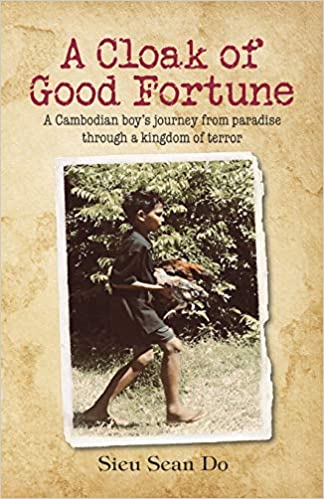
“This is too much! It seems like I just get over one crisis and another occurs. I need to piece my soul together.” So blurted author Sieu Sean Do’s mother after the family’s harrowing and narrow escape into Viet Nam from the Khmer Rouge genocide in their native Cambodia. Sieu Sean’s memoir of the family’s journey from an idyllic childhood in rural Cambodia through the hell of the Killing Fields is his work through witnessing and storytelling to piece his soul together.
Sieu’s narrative of the family’s long ordeal is largely straightforward. He was a child and teenager during these ordeals, so we see them through the innocent boy’s eyes. The narrative piles incident upon incident as challenges, crises, betrayals, disappointments, abandonments, starvation, crimes, executions, and accidental deaths cascade not only upon this family, but all of Cambodia. Yet the story takes us to Cambodian traditions and intimately into his large extended family that, miraculously, survived together. As he summarizes at the end, “Our elders taught us well that we need to survive not just alone, but together.” Thus, as readers we have close encounters not just with the horrors of genocide, but the intimacies of a traditional Cambodian family and many traditional practices and folk tales that surround and support the survivors in their ordeals.
The concept of trauma holds a prominent position both in the Humanities and in the Behavioural Sciences. It is simultaneously invoked in a variety of contexts and contested for its fuzziness, Western/Eurocentric pedigree, and sociocultural implications. Given the wide currency that the discourse of trauma has acquired, a study that investigates the roots of the concept and its connection to language, war, and technology is a very welcome addition to the scholarship on modernity. Indeed, as Michael Rothberg writes in the preface of The Future of Trauma Theory: Contemporary Literary and Cultural Criticism, “thinking genealogically about trauma is one essential means of opening it towards possible, alternative futures” (Rothberg 2013, xi). John Zilcosky’s The Language of Trauma is a brilliant case in point. The first, more noticeable, goal of the book is to shed light on the relationship between trauma and modernity. Zilcosky focuses on the experiences of war, bombing, and early railway journeys – three phenomena that bring to the fore the violence of modern warfare and bureaucratic-mechanised work. The study concentrates on Germanophone literature, taking E.T.A. Hoffmann’s The Sandman, Sigmund Freud’s The Uncanny, and Franz Kafka’s The Metamorphosis as primary examples. These close readings allow Zilcosky to historicise trauma and dissect its aporias, in particular, the difficulty of having one’s trauma recognised – a difficulty that often generates a short circuit, a trauma that grows out of the very slipperiness of trauma and the indeterminacy of its epistemological and ontological status. The second, thought-provoking, goal of the book “is to connect this medical language of trauma with the language of scepticism in romanticism and modernism, specifically, through the two discourses’ obsession with inscrutability” (p. 6).
Close Encounters in War and Propaganda: The Battles for Hearts and Minds
Gino Boccasile (1901-1952) WWII Italian anti-American Fascist propaganda poster 1943. Public domain image.
As the war following the invasion of Ukraine rages with a deluge of air strikes, sieges and ground operations, the world holds its breath witnessing the conflict’s narrative being shaped by the global media as well as international politicians. Ukrainian President Volodymyr Zelensky tells his people how to view the war, helping them to make sense of the conflict and, more importantly, building the belief in Ukraine’s ultimate success. Russia, too, has a specific narrative of the war aimed at building support for the military operation which is described as “denazification” and “demilitarization” of Ukraine, but never as an invasion.
This parallel war to win hearts and minds is not new in the history of warfare. In fact, it is a rather crucial aspect of any conflict, but it has certainly become critical since the Twentieth century, with the technological development of media which has allowed to bring the news to every home. Besides strengthening morale, the aim of any war propaganda campaign is also to demoralize the enemy and break their will to fight. Because of its use over the centuries, the term “propaganda” has gained very strong negative connotations, evocative of some kind of sinister activity.
In the Twentieth century, propaganda has come to be seen mostly as manipulated information. In the United States in particular, the Committee on Public Information, also known as Creel Committee, in the Great War had created an unprecedented propaganda campaign, distorting perceptions, unleashing hate and sometimes even persecution against Germans in America. In the Thirties and Forties, the creation of refined and very efficient propaganda machines under the totalitarian regimes established in Europe between the wars strengthened its perception as an anti-democratic tool and a threat to individual freedom. The Third Reich’s Ministry of Public Enlightenment and Propaganda in Nazi Germany was headed by Joseph Goebbels and spread its message through art, music, radio and film, which had a key role in disseminating ideas on the superiority of the German military power and on antisemitism.
Propaganda, broadly defined as “the expression of opinions or actions carried out deliberately by individuals or groups with a view to influencing the opinions or actions of other individuals or groups for predetermined ends and through psychological manipulation” (Koppes&Black, Hollywood Goes to War, 2000, pp. 49-50), seemed to correspond more to the enemy’s approach. Allied information policies came to be known instead as psychological operations, with the creation of the Psychological Warfare Branch which had the specific purpose of countering the enemy’s message and promoting alternative Allied interpretations of current events. This approach became a vital strategic contribution to winning the war.
With the Cold War, these policies undertaken to counter the communist regimes’ propaganda came to be known as ‘public diplomacy’, which deals with “the cultivation by governments of public opinion in other countries; the interaction of private groups and interests in one country with another; the reporting of foreign affairs and its impact on policy; communication between those whose job is communication, as diplomats and foreign correspondents” (Cull, Public Diplomacy, 2006). In other words, it is persuasion through “soft power”, to adopt the definition of former National Intelligence Council chief Joseph S. Nye. If “hard power” is the ability to induce other countries to change their positions through the use of military and economic power, “soft power” involves “the ability to get what you want by attracting and persuading others to adopt your goals […] attraction is much cheaper than coercion” (Nye, The Paradox of American Power, 2002, p. 15).
Issue n. 6 of the CEIWJ wishes to investigate the theme of “close encounters in war” in connection with propaganda, psychological warfare and public diplomacy. We want to study individual testimonies and experiences as well as cultural productions and diplomatic sources through a variety of historical periods and examine them through a range of theoretical and critical perspectives.
We invite, in accordance with the scientific purpose of the journal, contributions that focus on human dimensions and perspectives to this topic. We, therefore, seek articles that analyse the close encounters in war with propaganda, psychological warfare and public diplomacy from the point of view of human experience, in ancient, modern and contemporary periods.
The following aspects (among others) may be considered:
Representation and perception of self and others;
Language, public information and propaganda (clichés, conceptual distortion, derogatory expressions, rhetoric manipulation, etc.);
Propaganda, public diplomacy and ideology (e.g. racism, nationalism, religious fanaticism, etc.);
Ethical and moral problems of propaganda;
The critique of propaganda through Micro-History and Oral History;
False myths and invented traditions;
Anti-propaganda attitudes: pacifism, criticism, non-violence, conscience objection, and sabotage;
Propaganda, public diplomacy and diversity (gender, disability, ethnicity, cultural heritage, etc.);
Pop culture, psychological warfare and propaganda (film, TV, journalism, and comics);
Propaganda and personal narratives (diaries, memoirs, and letters);
Literary fiction and propaganda;
The relationship between propaganda and science;
The impact of propaganda, psychological warfare and public diplomacy on local communities.
CEIWJ encourages inter/multidisciplinary approaches and dialogue among different scientific fields to promote discussion and scholarly research. The blending of historical approaches with such disciplines as History, Cultural Studies, Philosophy, International Relations, Intelligence Studies, Literary Studies, Media and Film Studies, Psychology, Communication and similar will be warmly welcome. Contributions from established scholars, early-career researchers, and practitioners who have dealt with the close encounter with propaganda, psychological warfare and public diplomacy in war in the course of their activities will be considered. Case studies may include different historical periods and geographic areas.
The editors of the Close Encounters in War Journal invite the submission of abstracts of 250 words in English by 31 March 2023 to ceiwj@nutorevelli.org. The authors invited to submit their works will be required to send articles of 6000-8000 words (endnotes included, bibliographical references not included in word-count), in English by 16 June 2023 to ceiwj@nutorevelli.org. All articles will undergo a process of double-blind peer review. We will notify the results of the peer-reviewing in September 2023. Final versions of revised articles will be submitted by November 2023.
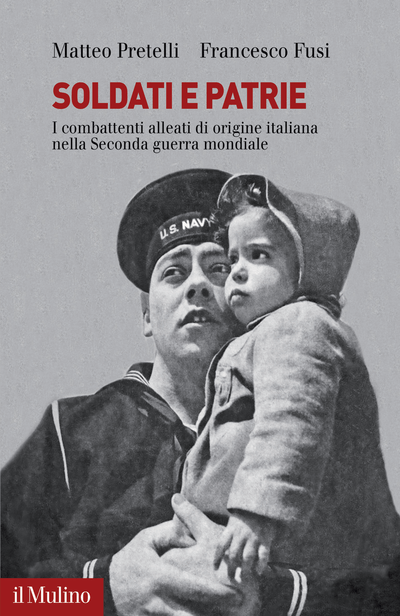
The Allied armies fighting in the Second World War were an international and transcultural aggregation of Western, African, Southern American, and Asian soldiers. The main reason for the intercultural diversity in the French and British armies consisted of the extensive deployment of colonial troops on several fronts, from Europe to the Pacific, in the air and on the sea. Unlike their European Allies, the United States did not rely on a colonial empire and had only American troops to deploy in the war. However, the American armed forces were the mirror of American society, which included a variety of ethnic and cultural communities. The book Soldati e patrie (Soldiers and Fatherlands) offers remarkable insight into one particular aspect of this phenomenon, namely the presence of the Italians in the Allied armies, with a focus on the US Army.
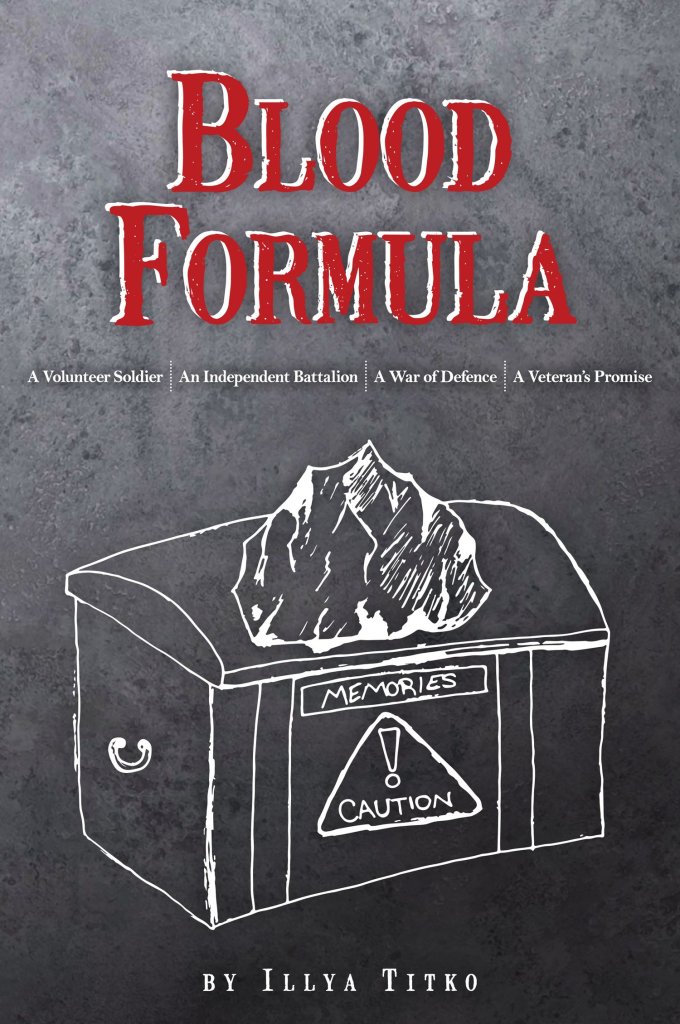
Senior Lieutenant Illya Titko is a combat veteran from Kalush, Ivano-Frankivsk Oblast, Ukraine. He was drafted in September 2015, or rather, he volunteered for the mobilization that was underway. Mr. Titko writes his book from the perspective of a citizen-soldier, as a man who continued to maintain one foot firmly in the civilian world, even though his new environment was a war zone, and “war is when your entire world is turned upside down.”
Jeffrey Stephaniuk, the excellent translator of this book, introduces with these words the author (at p. 6), highlighting the perspective from which the whole story is told: that of a “citizen in arms”, a man who has answered the impellent call of duty when his country was in dire danger. Titko himself adds some remarks a few pages later:
It was not an easy task for me to write this book. It was a real inner struggle, for over a year, on whether I should write it or not. But I was pre-occupied with those past events, mulling that chaotic time over and over in my mind, conscious of the fact that it really wasn’t that long ago when I lived through them. There were nights when I couldn’t even sleep. I’d argue with myself: Should I or should I not write this book? I clearly understood that not only should I write this book, but it was necessary for this book be written. First, it was necessary so that everything I experienced would have its place and not become lost in the subsequent living of my everyday life. I needed to write this book so that those who hadn’t been there personally could know about these events. I wanted them to know what happened and how they happened to those involved, with the people, with the country, and of course all those individuals who resolved to walk this same path, namely soldiers defending their country. I realized that such a book would be necessary for children, grandchildren, and great grandchildren, so that they would have access to first-hand accounts about these difficult and stormy days and nights in the history of our nation. (12)
War affects our world and lives, whether we are directly involved or not. Its effects are like those of a disease that spreads through the organism, weakening it and altering its relationship with the environment. War destroys communities, poisons associated life, and builds walls. And, which is worse, it plants rotten seeds from which bitter fruits will grow. One antidote to the spread of its malice is listening to the stories of those who have seen its very Gorgon’s face and suffered from its scorching touch.
The Close Encounters in War Journal inaugurates a new section called Back to the light. Stories of healing from trauma. It is entirely devoted to the stories of people who have experienced the war and learned how to cope with the burden of its traumatic memories. Sharing these stories means much to the authors both in terms of ethical commitment and psychological effort. They reveal something intimate that has been troubling them, a core of traumatic memories that haunt their lives. Nonetheless, they are eager to share their stories worldwide with a public of interested and empathic readers, who want to listen and know what war is about.
We are happy to launch this project with two contributions by Ukrainian refugee Olga Kornyushyna and American former infantryman Charles Collins. Olga tells about her traumatic encounter with war as a civilian who had to flee from Kyiv, bombed by the Russians in the present war. Charles tells how he went through four turns of deployment overseas and how he had to fight to heal the moral wounds that such experiences inflicted on him.
The editors of the CEIWJ would like to express their profound gratitude to the authors of these stories and invite all who have stories of healing from war trauma to share them with us and our readers. Veterans, families, friends, therapists, and healers are welcome to submit their contributions.
Our gratitude also goes to Ed Tick, who has generously accepted to embark on this endeavour as co-editor of the Back to the light project, and the members of the section-specific editorial board, Charles Aishi Blocher, Kate Dahlstedt, Nathan Graeser, Lawrence Markworth, Donald McCasland, Glen Miller, Roxy Runyan, and Floyd Striegel.
Svitlana Povalyaeva is a Ukrainian writer and poet. She received a degree in journalism at the National Shevchenko University in Kyiv and worked as a journalist for a number of years at major TV channels and media outlets. Svitlana is the author of eight books, one of which is a collection of poetry “After Crimea” that was written after the annexation of Crimea. Her second poetry book will be published in Ukraine by the end of 2022. Over the years, Svitlana took part in countless major literary events, festivals and forums as an author, presenter, and speaker. She practices Buddhism, which has an important influence on her writing. Svitlana is a long-standing civil activist. She took an active part in the Revolution of Dignity (also known as Euromaidan) in Kyiv in 2013-2014 together with her two sons.
Her younger son Roman Ratunyi was a well-known Ukrainian public figure, a defender of green recreational zones of the city of Kyiv, an author of original forms of municipal activism and resistance to corruption, which went far beyond environmental issues, and a volunteer soldier. When the full-scale Russian invasion broke down on February 24, 2022, Roman enlisted as a volunteer and fought in the battle for Kyiv, he took part in the de-occupation of Kyiv Oblast and later joined the 93rd separate mechanized brigade of the Ukrainian Armed Forces “Kholodnyi Yar” where he was a part of the military intelligence unit. Roman took part in the liberation of the town of Trostyanets and fought in Sumy Oblast. He was killed in action near Izium, Kharkiv Oblast on June 8, 2022. The sentence written by Roman in his last will and testament is symbolic: “Kyiv, I died far from you, but I died for you”. Roman became an inspiration for thousands of Kyiv residents and a symbol of the young generation of Ukrainians.
A Chapter excerpt from Soul Medicine: Healing through Dream Incubation, Oracles, Visions, and Pilgrimage. Forthcoming in January 2023, by kind permission of Inner Traditions Publishing, https://www.innertraditions.com/books/soul-medicine. All rights reserved.
The bulwark
I am leading a healing journey to Greece with World War II, Korean and Vietnam War veterans and their wives. We will use both ancient warrior and Asklepian dream incubation traditions, the origins of modern psychotherapy, for guidance and healing of modern wounds.
We stand at the rocky base of the towering Acropolis, Athens’s bulwark, and holy center. Her patron goddess Athena’s gleaming temple is high above. We are in the remains of the Asklepion, sanctuary of the healing god founded during plague and active for centuries. Suddenly rocks fall from above, barely missing us as they clatter on the stone walkway. We look up. Teenagers toss stones down from the height and laugh.
Some onlookers freeze or duck for cover, but short and broad John Giannini steps into the barrage. John is Italian-American, a Jungian analyst from Chicago and a World War II combat veteran. His humble size betrays his strength. He stands as if ready to take the shots from above to protect the rest of us. He looks up, points, and calls out, “Stop! This is dangerous, not a joke. This place is sacred. Athena is your goddess. No violence here. You are commanded to stop!” The youths drop their raised arms and slink away.
On her height above, Athena once had several guises. She was called Parthenos, maiden, the virgin goddess, and Nike, victory, with temples to these. Her third guise greeting every supplicant coming through her gates was the goddess’s tall statue striding forward with her spear and shield at the ready. She was Athena Promachos – The Defender, the One in Front, the Bulwark, the Protector. She taught that preservation and protection, not aggression and violence, were the true warrior values and strategy rather than aggression the best tool.
On the ground below, our group’s elder, an old combat veteran, strode forward to protect us all…