Call for Articles for Issue n. 7 (2024): Close Encounters in War and Personal Narratives. Experience, Memory, and Storytelling

As a genre, personal narratives have evolved over two centuries, passing from being almost exclusively memoirs written by high-ranking officers (mostly noble) to consisting of a much more multifaceted variety of expressive forms including letters, diaries, autobiographical sketches, poems, published or unpublished memoirs, oral histories and autobiographical fiction. After a long-lasting prejudice that banned personal narratives from the history of war and conflict, which was relegated to the disciplinary field of Military History, since the 1960s historians have begun to look at these narrations as valid and valuable sources of historical knowledge, thus giving impulse, after the so-called “cultural” and “narrative” turns after the 1970s, to the birth of sub-disciplines such as Micro-History, History of Mentality, Cultural History, Oral History and more recently the History of the Emotions. Working with personal narratives is a challenging scholarly enterprise due to the flickering and multifaceted nature of this kind of written expression, which is transversal to literary genres while including forms, styles, and registers typical of the spoken language. Personal narratives can hardly provide an overall comprehension and depiction of war, as they can inform about events that occurred on a smaller scale and the perception that human beings have of the war as a direct experience. Therefore, working with personal narratives often requires intellectual flexibility and the ability to blend different disciplinary approaches by borrowing diverse methodological, critical and analytical tools.

Issue n. 7 of the CEIWJ aims to investigate the theme of the close encounters in war in connection with the universe of personal narratives to study how people have accounted for their personal experience of war in ancient, pre-modern, modern and contemporary periods. Guest Editor for Issue n. 7: Fabio Caffarena (University of Genoa).

The editors of the Close Encounters in War Journal invite the submission of abstracts of 250 words in English by 31 March 2024 to ceiwj@nutorevelli.org.

Download the CfA here

Issue n. 6 (2023) of the CEIWJ is online

We are delighted to announce that Issue n. 6 (2023), Close Encounters in War and Propaganda: The Battles for Hearts and Minds, is online.

Gino Boccasile (1901-1952) WWII Italian anti-American Fascist propaganda poster, 1943. Public domain image.

The full Issue and single contributions can be downloaded as PDF here:

Issue n. 6 (2023), Close Encounters in War and Propaganda: The Battles for Hearts and Minds

Close Encounters in War Journal – Call for articles for Issue n. 6 (2023)

Close Encounters in War and Propaganda: The Battles for Hearts and Minds

Gino Boccasile (1901-1952) WWII Italian anti-American Fascist propaganda poster 1943. Public domain image.

As the war following the invasion of Ukraine rages with a deluge of air strikes, sieges and ground operations, the world holds its breath witnessing the conflict’s narrative being shaped by the global media as well as international politicians. Ukrainian President Volodymyr Zelensky tells his people how to view the war, helping them to make sense of the conflict and, more importantly, building the belief in Ukraine’s ultimate success. Russia, too, has a specific narrative of the war aimed at building support for the military operation which is described as “denazification” and “demilitarization” of Ukraine, but never as an invasion.

This parallel war to win hearts and minds is not new in the history of warfare. In fact, it is a rather crucial aspect of any conflict, but it has certainly become critical since the Twentieth century, with the technological development of media which has allowed to bring the news to every home. Besides strengthening morale, the aim of any war propaganda campaign is also to demoralize the enemy and break their will to fight. Because of its use over the centuries, the term “propaganda” has gained very strong negative connotations, evocative of some kind of sinister activity.

In the Twentieth century, propaganda has come to be seen mostly as manipulated information. In the United States in particular, the Committee on Public Information, also known as Creel Committee, in the Great War had created an unprecedented propaganda campaign, distorting perceptions, unleashing hate and sometimes even persecution against Germans in America. In the Thirties and Forties, the creation of refined and very efficient propaganda machines under the totalitarian regimes established in Europe between the wars strengthened its perception as an anti-democratic tool and a threat to individual freedom. The Third Reich’s Ministry of Public Enlightenment and Propaganda in Nazi Germany was headed by Joseph Goebbels and spread its message through art, music, radio and film, which had a key role in disseminating ideas on the superiority of the German military power and on antisemitism.

Propaganda, broadly defined as “the expression of opinions or actions carried out deliberately by individuals or groups with a view to influencing the opinions or actions of other individuals or groups for predetermined ends and through psychological manipulation” (Koppes&Black, Hollywood Goes to War, 2000, pp. 49-50), seemed to correspond more to the enemy’s approach. Allied information policies came to be known instead as psychological operations, with the creation of the Psychological Warfare Branch which had the specific purpose of countering the enemy’s message and promoting alternative Allied interpretations of current events. This approach became a vital strategic contribution to winning the war.

With the Cold War, these policies undertaken to counter the communist regimes’ propaganda came to be known as ‘public diplomacy’, which deals with “the cultivation by governments of public opinion in other countries; the interaction of private groups and interests in one country with another; the reporting of foreign affairs and its impact on policy; communication between those whose job is communication, as diplomats and foreign correspondents” (Cull, Public Diplomacy, 2006). In other words, it is persuasion through “soft power”, to adopt the definition of former National Intelligence Council chief Joseph S. Nye. If “hard power” is the ability to induce other countries to change their positions through the use of military and economic power, “soft power” involves “the ability to get what you want by attracting and persuading others to adopt your goals […] attraction is much cheaper than coercion” (Nye, The Paradox of American Power, 2002, p. 15).

Issue n. 6 of the CEIWJ wishes to investigate the theme of “close encounters in war” in connection with propaganda, psychological warfare and public diplomacy. We want to study individual testimonies and experiences as well as cultural productions and diplomatic sources through a variety of historical periods and examine them through a range of theoretical and critical perspectives.

We invite, in accordance with the scientific purpose of the journal, contributions that focus on human dimensions and perspectives to this topic. We, therefore, seek articles that analyse the close encounters in war with propaganda, psychological warfare and public diplomacy from the point of view of human experience, in ancient, modern and contemporary periods.

The following aspects (among others) may be considered:

  • Representation and perception of self and others;
  • Language, public information and propaganda (clichés, conceptual distortion, derogatory expressions, rhetoric manipulation, etc.);
  • Propaganda, public diplomacy and ideology (e.g. racism, nationalism, religious fanaticism, etc.);
  • Ethical and moral problems of propaganda;
  • The critique of propaganda through Micro-History and Oral History;
  • False myths and invented traditions;
  • Anti-propaganda attitudes: pacifism, criticism, non-violence, conscience objection, and sabotage;
  • Propaganda, public diplomacy and diversity (gender, disability, ethnicity, cultural heritage, etc.);
  • Pop culture, psychological warfare and propaganda (film, TV, journalism, and comics);
  • Propaganda and personal narratives (diaries, memoirs, and letters);
  • Literary fiction and propaganda;
  • The relationship between propaganda and science;
  • The impact of propaganda, psychological warfare and public diplomacy on local communities.

CEIWJ encourages inter/multidisciplinary approaches and dialogue among different scientific fields to promote discussion and scholarly research. The blending of historical approaches with such disciplines as History, Cultural Studies, Philosophy, International Relations, Intelligence Studies, Literary Studies, Media and Film Studies, Psychology, Communication and similar will be warmly welcome. Contributions from established scholars, early-career researchers, and practitioners who have dealt with the close encounter with propaganda, psychological warfare and public diplomacy in war in the course of their activities will be considered. Case studies may include different historical periods and geographic areas.

The editors of the Close Encounters in War Journal invite the submission of abstracts of 250 words in English by 31 March 2023 to ceiwj@nutorevelli.org. The authors invited to submit their works will be required to send articles of 6000-8000 words (endnotes included, bibliographical references not included in word-count), in English by 16 June 2023 to ceiwj@nutorevelli.org. All articles will undergo a process of double-blind peer review. We will notify the results of the peer-reviewing in September 2023. Final versions of revised articles will be submitted by November 2023.

Please see the submission guidelines.

Download the CFA in PDF.

Veteran healing: “Strong-Hearts”, by Glen Miller and Scott Hutchinson

Scott Hutchinson has been a Pastor in the United Church of Christ for the last 30 years. Scott’s formal education includes professional degrees in Divinity, Counseling and Human Relations, and Social Work. Prior to full time ministry, Scott was a counseling professional. Scott’s areas of focus and expertise include forgiveness, trauma healing, and peace education.  Scott is co-founder of Touchstone Veterans Outreach and of the COMPASS Healing Circle. He has experience in two war zones as a noncombatant.

Glen Miller is adjunct professor, Fox School of Business, Temple University. He teaches Business Ethics and a course in Leadership. Glen served as a Ranger Team Leader in Vietnam from 1969 – 1970. Glen lead two Ranger Teams into Cambodia at the beginning of the invasion, May 1, 1970.

More than forty years after combat and warzone peace-building, the authors helped form a group that is creating space and place for healing from war wounds to the soul. The organizing leaders called the group Touchstone Veterans Outreach. They talked and mused and connected with others that were interested in the mystery of war healing. In short, they did not turn away but towards the pain wrapped and sealed within the bodies and souls of veterans…

Read full article here

Close Encounters in War launches a new section for stories and poetry

Stories and poems of close encounters in war

Close encounters in war are, before anything else, life experiences that change in depth those who make them. As editors of the Close Encounters in War Journal, we have always been aware of this simple but basic fact and therefore decided to open the third issue of the journal (2020) to creative writing. We wanted to propose an experimental encounter between scholarly research and forms of creative and non-fictional writing whose roots go deep into experience and imagination.

After that exciting experience, being aware that stories and poems of close encounters in war deserve a place of their own in the website, we are happy to announce the launch of the new section “Stories and poems of close encounters in war“.

This new section of the journal is divided into three subsections (Poetry, Fiction, and Testimonies and Autobiographical Essays) and is meant to be a space for creativity and exploration of all those forms of writing that help us understand war more thoroughly as a multifaceted and complex experience. We invite storytellers, veterans, practitioners, relatives and friends of veterans, poets, therapists, and much more to feel free to submit their contributions to the CEIWJ. We will be happy and grateful to read year round your original and unpublished works about your encounters in and with war, real and imagined. We will select and publish the best, more insightful, and inspiring contributions.

Call for articles: CEIWJ n. 4 (2021), “Emotions and Close Encounters in War”

The editors of the CEIWJ invite to submit abstracts by February 10, 2021

The universe of emotions has always represented a major challenge for research in every field of knowledge, from Philosophy to Physics, from Psychology to the Arts. Although everyone knows what emotions are insofar as almost everyone can “feel”, as it comes to provide a clear or systematic explanation of emotions, words fail. Today, interdisciplinary studies see cognitivists working side by side with psychologists, linguists, anthropologists, biologists, historians, and philosophers to elaborate insightful theories of emotions. One breakthrough that has oriented the new research agenda since the 1990s consists in the claim that the human mind is – despite the rationalist tradition rooted in Descartes’s philosophy and the following theories of Enlightenment and Positivism – emotional (see, for example, pivotal studies by Antonio Damasio and Joseph Ledoux in the 1990s).

During the preparation of Issue n. 3, devoted to post-traumatic stress disorder, we have grown even more aware that war and emotions are deeply entwined. We may even dare to say that if humans go to war, it is mostly due to emotions, although the rational urge to organise and explain war in term of science is equally powerful (as historian Bernd Hüppauf and ethologists such as Irenäus Eibl-Eibelsfeld have demonstrated). For sure, the individual caught in a war, from its preparation to the very experience of battle, is exposed to a great number of emotional stimuli that affect their reactions and decision-making. Propaganda, the feeling of “belonging”, affective bonds, ethical inclinations, and cultural notions such as racism, nationalism, patriotism, cosmopolitanism, as only some of the numerous and varied contributing factors that may lead people to make war or to avoid it. We believe that the “close encounter” makes this list as well as a fundamental emotional experience in war.

Issue n. 4 of CEIWJ will aim to investigate the theme of close encounters in connection to the emotions by exploring its facets both on a micro-scale, by studying individual testimonies and experiences, and on a theoretical and critical basis throughout history. CEIWJ encourages inter/multidisciplinary approaches and dialogue among different scientific fields. We therefore welcome articles that frame the topic within the context of close encounters in war from the perspective of Aesthetics, Anthropology, Arts, Classics, Cognitive Science, Ethics, History, Linguistics, Politics, Psychology, Sociology, and other disciplines relevant for the investigation of the topic. Case studies may include different historical periods as well as over different geographic areas.

We invite articles which analyse the connection between war and emotions from ancient to modern and contemporary periods, from the perspective of the encounter, reaching beyond the study of military tactics and strategy and focusing on the emotional dimension of how human beings “encounter” each other – or themselves – in war. Contributions are invited to promote discussion and scholarly research from established scholars, early-career researchers, and from practitioners who have dealt with the emotional response to war in the course of their activities.

Topics and research fields that can be investigated include but are not limited to:

  • Theoretical inter/multidisciplinary approaches to the study of emotions and war;
  • The emotional impact of war on culture and social behaviour;
  • The emotional and ethical impact of language in the context of war (propaganda, pacifism, anti-war literature, etc.);
  • The emotional aspects of oral history, memory studies, therapy, and PTSD-counselling in theory and practice;
  • Expressing and representing emotions and war in music, figurative arts, literature, testimonies and personal narratives;
  • War and the emotional elaboration of death, mourning, trauma, and loss;
  • The emotional impact of colonial and civil wars, captivity and deportation;
  • Emotional response to war crimes and military justice;
  • Emotional implications of otherness, race, and gender in war-contexts.

The editors of Close Encounters in War Journal invite the submission of abstracts of 250 words in English by 10 February 2021 to ceiwj@nutorevelli.org. The authors invited to submit their works will be required to send articles of 6000-8000 words (endnotes included, bibliographical references not included in word-count: please see submission guidelines at https://closeencountersinwar.org/instruction-for-authors-submissions/) in English by 30 June 2021 to ceiwj@nutorevelli.org. All articles will undergo a process of double-blind peer-review. We will notify the results of the peer-reviewing in September 2021. Final versions of revised articles will be submitted by November of 2021.

Deadline for submissions extended to June 20, 2020

Submission deadline for Issue n. 3 (2020): “Close Encounters in War and Post-Traumatic Stress Disorder”

In consideration of the impact of the current health emergency on the work of many scholars and colleagues, the editors of Close Encounters in War Journal have decided to extend the deadline for the 3rd issue of the journal: we invite the submission of articles of 6000-8000 words (endnotes included, bibliographical references not included in word-count: please see submission guidelines at https://closeencountersinwar.org/instruction-for-authors-submissions/) in English by 20th June 2020 (although we can allow a certain flexibility) by e.mail to ceiwj@nutorevelli.org. Decisions will be made by mid-July 2020, and the selected articles will undergo a process of double-blind peer-review. The authors invited to publish will have to submit their fully revised articles by 1st November 2020.

Read full CFA here: https://closeencountersinwar.org/2019/12/16/call-for-articles-ceiwj-issue-n-3-2020-close-encounters-in-war-and-post-traumatic-stress-disorder/

Call for Articles – CEIWJ, Issue n.3 (2020): “Close Encounters in War and Post-Traumatic Stress Disorder”

Call for articles

Close Encounters in War Journal is a peer-reviewed journal aimed at studying war as a human experience, through interdisciplinary and multidisciplinary approaches ranging from the Humanities to the Social Sciences. The third issue (n. 3) of the journal will be thematic and dedicated to the experience of PTSD as a consequence of war and conflict, and titled “Post-Traumatic Stress Disorder as Aftermath of Close Encounters in War”.

Wars in general are cultural phenomena, among the most ancient and deeply rooted aspects of human cultural evolution: investigating their meaning, by reflecting on the ways we experience wars and conflicts as human beings is therefore essential. Conflict is deeply intertwined with language, culture, instincts, passions, behavioural patterns and with the human ability to represent concepts aesthetically. The concept of “encounter” is therefore fundamental as it involves experience, and as a consequence it implies that war can shape and develop our minds and affect our behaviour by questioning habits and values, prejudices and views of the world.

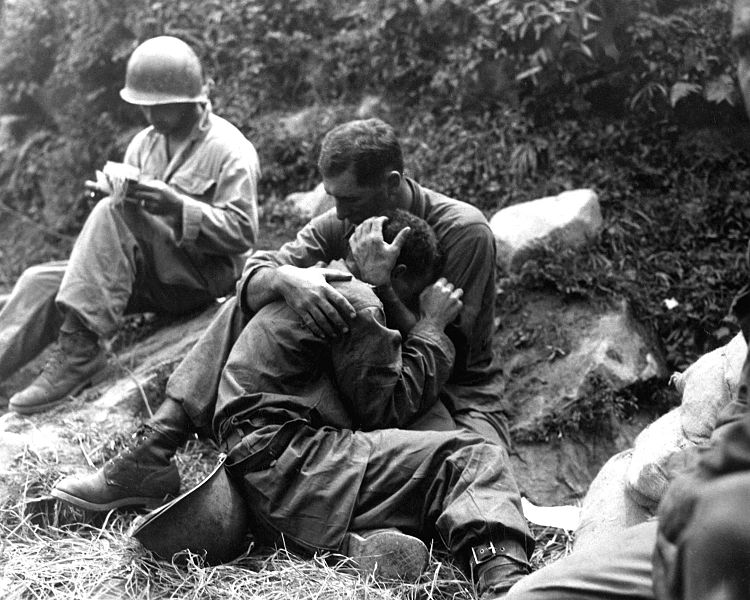
The notion of Post-Traumatic Stress Disorder (PTSD) was first introduced in the early 1980s by the American Psychiatric Association in order to describe a psychiatric condition occurring to people who have been involved in traumatic events as victims or witnesses. Although PTSD is not exclusively related to war and conflict, in common imagery it is mostly connected with veterans, with particular insistence on those who served in the American and British Forces deployed in Iraq and Afghanistan over the last few decades. Military personnel, civilians, NGO operators, journalists, and displaced people are equally exposed to PTSD as an aftermath of being involved in war. Over the most recent years, figures have grown, demonstrating that PTSD remains a major factor of the negative impact of war on society, together with environmental destruction, human and economic loss.

The label PTSD has replaced, in the field of combat-related conditions, previous definitions that were aimed at describing the psychiatric and bodily state of distress of combatants who, despite not being physically injured, were nonetheless unable to keep serving and needed medical assistance. Although scholars have attempted to date back PTSD to ancient warfare, even Greek,[1] the first attempt to clinically define the state was made during the Napoleonic wars. The state of shock in which soldiers were left by passing-by cannonballs was called vent du boulet, or “cannonball wind”.[2] During the American Civil War, the state of combat-related mental distress was called “soldier’s heart” and during the Great War the label was changed into “shell shock”, although the condition was not limited to casualties of explosions. During WWII the more generic definitions of “war neurosis”, “combat fatigue”, and “operational fatigue” spread in the English-speaking psychiatry, while German and Russian doctors coined their own formulas to describe one same phenomenon shared by thousands of combatants (and civilians as well): a state of confusion and hyperarousal, amnesia, dullness, with outbursts of rage and fear, hyperkinesis and tremors that could appear immediately as well as after months from the trauma and persisted as an impairing condition.

Nowadays, combat-related PTSD is addressed by national medical institutions (military and civilian) as a major cause of social distress, suicide, violence, antisocial behaviour, depression, and addiction to substances among a relevant number of veterans, with a significant negative impact on the quality of life of families and relatives, not to mention the deterioration of life-expectancy for the veterans themselves. The main fields of study in which PTSD is addressed today are neuropsychiatry and cognitive psychology with thousands of publications, while the Arts and Humanities have so far provided a modest contribution to the understanding of the topic. Historical research has largely focused on WWI and “shell shock” and the number of scholars (especially in the US and the UK) who study PTSD in connection with the wars in Vietnam, Iraq and Afghanistan is growing. Sound interdisciplinary research is still wanted and a broad spectrum of disciplinary fields have not yet been covered in the framework of PTSD-studies.

Issue n. 3 of CEIWJ will aim to investigate the theme of close encounters in connection to the experience of PTSD by exploring its facets both on a micro-scale, by studying individual testimonies and experiences, and on a theoretical and critical basis throughout history. CEIWJ encourages interdisciplinary approaches and the dialogue among different scientific fields. We therefore welcome articles on conflict-related PTSD that frame the topic within the context of close encounters in war from the perspective of Aesthetics, Anthropology, Arts, Classics, Cognitive Science, Ethics, History, Linguistics, Politics, Psychology, Sociology, and other disciplines relevant for the investigation of the topic.

We invite articles which analyse the experience of PTSD from ancient to modern and contemporary periods, from the perspective of the encounter, reaching beyond the study of military tactics and strategy and focusing on the way human beings ‘encounter’ each other with and within the experience of PTSD. Contributions are invited to promote discussion and scholarly research from established scholars, early-career researchers, and from practitioners who have encountered conflict-related PTSD in the course of their activities.

The topics that can be investigated include but are not limited to:

  • Violence and trauma
  • Cultural, ethical, social, political, and psychological response to conflict-related PTSD
  • PTSD and colonial wars, civil wars, international conflicts
  • War captivity and other forms of deportation
  • War crimes, ethnic cleansing, gendered violence
  • Representations of otherness, race, and gender
  • Cognitive aspects of conflict-related PTSD
  • Testimonies, personal narratives
  • PTSD in the arts
  • Oral history and memory studies

The editors of Close Encounters in War Journal invite the submission of articles of 6000-8000 words (endnotes included, bibliographical references not included in word-count: please see submission guidelines https://closeencountersinwar.org/instruction-for-authors-submissions/) in English by 20th June 2020 (although we are willing to allow a certain flexibility) to ceiwj@nutorevelli.org. Decisions will be made by mid-July 2020, and the selected articles will undergo a process of double-blind peer-review. The authors invited to publish will have to submit their fully revised articles by 1st November 2020.


[1]    Helen King, Recovering Hysteria from History: Herodotus and the First Case of “Shell-Shock”, in Contemporary Approaches to the Science of Hysteria. Clinical and Theoretical Perspectives, ed. by Peter Halligan, Christopher Bass and John Marshall, Oxford, Oxford University Press, 2001, pp. 36-48.

[2]    Marc-Antoine Crocq and Louis Crocq, From Shell Shock and War Neurosis to Posttraumatic Stress Disorder: A History of Psychotraumatology, «Clinical research», 2, 1 (2000): 47-55 (p. 48).