Between the day we received Olga’s story and today, the gardening company in Odessa mentioned in the text was destroyed during the Russian air strike on May 1, 2024. Thousands of plants and trees were burned, warehouses and offices destroyed. Luckily there were no casualties among the employees. The owners of the company released a video of the aftermath of the attack.
After each assault, the Russian occupiers would take a break from two to three days for pulling up the reserves, delivering more ammunition, and picking up their stiffs and wounded. The stiffs often remained unclaimed. The wounded would be picked up more often than not, but not on the regular basis.
If you caught this break, it was possible to daringly fuck around in the tree lines. The key was not to get too cheeky and keep out of the enemy’s line of sight. Or else.
Sometimes this moment of comfort came from our side as well. Then the silence was even scarier than hearing all those various bangs from both sides. On just such a day, we ventured into tree line number 18 with one aim only – to steal something…
Better you than me. I remembered the first time I heard that aphorism. It sounded callous and cruel, but that wasn’t the point. It reflected the stark reality and limited options imposed by the war and shone an uneasy glow upon our Darwinian nature. I was going to need a wise, experienced, and convincing teacher to help me not just see this darkness but understand it. One day, he simply showed up.
David Klein, Psy.D., is a U.S. Veterans Administration Psychologist.
2010 is when I began to become a veteran. It was more than 40 years after I had returned to the United States from Viet Nam. Forty years of madness, nightmares, drug abuse, suicide attempts. 2010 is when I began to speak about it. And write about it. And cry. 40 years of tears coming out all at once. I am still becoming a vet. My first piece of writing as I started to embrace my identity as a veteran, that I share here, was an open letter to my brothers and sisters of the wars in Afghanistan and Iraq. Though the numbers given derive from the original writing in 2010, my message and warning are still relevant to any warriors from any country and war struggling to return home after experiencing the horrors of combat and many difficulties of return.
Lawrence Markworth served in the US Navy between 1962 and 1966 and participated in the Vietnam War on the USS Castor. After struggling for decades with his traumatic memories, he eventually reconnected with his younger self, who had gone through the ordeal of war. We publish here a short autobiographical testimony of Lawrence’s journey, which was extracted from his forthcoming memoir Rowing through a Sea of Rubble.
As a genre, personal narratives have evolved over two centuries, passing from being almost exclusively memoirs written by high-ranking officers (mostly noble) to consisting of a much more multifaceted variety of expressive forms including letters, diaries, autobiographical sketches, poems, published or unpublished memoirs, oral histories and autobiographical fiction. After a long-lasting prejudice that banned personal narratives from the history of war and conflict, which was relegated to the disciplinary field of Military History, since the 1960s historians have begun to look at these narrations as valid and valuable sources of historical knowledge, thus giving impulse, after the so-called “cultural” and “narrative” turns after the 1970s, to the birth of sub-disciplines such as Micro-History, History of Mentality, Cultural History, Oral History and more recently the History of the Emotions. Working with personal narratives is a challenging scholarly enterprise due to the flickering and multifaceted nature of this kind of written expression, which is transversal to literary genres while including forms, styles, and registers typical of the spoken language. Personal narratives can hardly provide an overall comprehension and depiction of war, as they can inform about events that occurred on a smaller scale and the perception that human beings have of the war as a direct experience. Therefore, working with personal narratives often requires intellectual flexibility and the ability to blend different disciplinary approaches by borrowing diverse methodological, critical and analytical tools.
Issue n. 7 of the CEIWJ aims to investigate the theme of the close encounters in war in connection with the universe of personal narratives to study how people have accounted for their personal experience of war in ancient, pre-modern, modern and contemporary periods. Guest Editor for Issue n. 7: Fabio Caffarena (University of Genoa).
The editors of the Close Encounters in War Journal invite the submission of abstracts of 250 words in English by 31 March 2024 to ceiwj@nutorevelli.org.
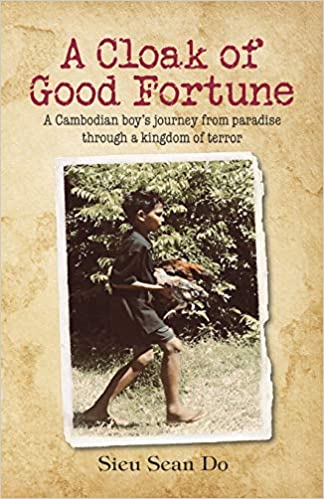
“This is too much! It seems like I just get over one crisis and another occurs. I need to piece my soul together.” So blurted author Sieu Sean Do’s mother after the family’s harrowing and narrow escape into Viet Nam from the Khmer Rouge genocide in their native Cambodia. Sieu Sean’s memoir of the family’s journey from an idyllic childhood in rural Cambodia through the hell of the Killing Fields is his work through witnessing and storytelling to piece his soul together.
Sieu’s narrative of the family’s long ordeal is largely straightforward. He was a child and teenager during these ordeals, so we see them through the innocent boy’s eyes. The narrative piles incident upon incident as challenges, crises, betrayals, disappointments, abandonments, starvation, crimes, executions, and accidental deaths cascade not only upon this family, but all of Cambodia. Yet the story takes us to Cambodian traditions and intimately into his large extended family that, miraculously, survived together. As he summarizes at the end, “Our elders taught us well that we need to survive not just alone, but together.” Thus, as readers we have close encounters not just with the horrors of genocide, but the intimacies of a traditional Cambodian family and many traditional practices and folk tales that surround and support the survivors in their ordeals.
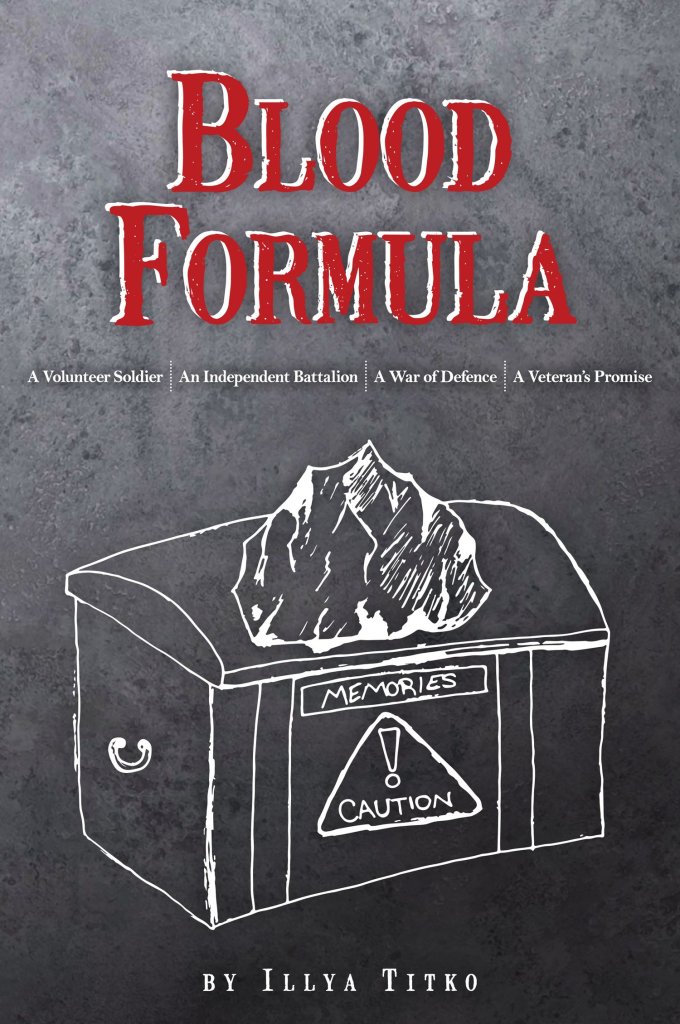
Senior Lieutenant Illya Titko is a combat veteran from Kalush, Ivano-Frankivsk Oblast, Ukraine. He was drafted in September 2015, or rather, he volunteered for the mobilization that was underway. Mr. Titko writes his book from the perspective of a citizen-soldier, as a man who continued to maintain one foot firmly in the civilian world, even though his new environment was a war zone, and “war is when your entire world is turned upside down.”
Jeffrey Stephaniuk, the excellent translator of this book, introduces with these words the author (at p. 6), highlighting the perspective from which the whole story is told: that of a “citizen in arms”, a man who has answered the impellent call of duty when his country was in dire danger. Titko himself adds some remarks a few pages later:
It was not an easy task for me to write this book. It was a real inner struggle, for over a year, on whether I should write it or not. But I was pre-occupied with those past events, mulling that chaotic time over and over in my mind, conscious of the fact that it really wasn’t that long ago when I lived through them. There were nights when I couldn’t even sleep. I’d argue with myself: Should I or should I not write this book? I clearly understood that not only should I write this book, but it was necessary for this book be written. First, it was necessary so that everything I experienced would have its place and not become lost in the subsequent living of my everyday life. I needed to write this book so that those who hadn’t been there personally could know about these events. I wanted them to know what happened and how they happened to those involved, with the people, with the country, and of course all those individuals who resolved to walk this same path, namely soldiers defending their country. I realized that such a book would be necessary for children, grandchildren, and great grandchildren, so that they would have access to first-hand accounts about these difficult and stormy days and nights in the history of our nation. (12)
War affects our world and lives, whether we are directly involved or not. Its effects are like those of a disease that spreads through the organism, weakening it and altering its relationship with the environment. War destroys communities, poisons associated life, and builds walls. And, which is worse, it plants rotten seeds from which bitter fruits will grow. One antidote to the spread of its malice is listening to the stories of those who have seen its very Gorgon’s face and suffered from its scorching touch.
The Close Encounters in War Journal inaugurates a new section called Back to the light. Stories of healing from trauma. It is entirely devoted to the stories of people who have experienced the war and learned how to cope with the burden of its traumatic memories. Sharing these stories means much to the authors both in terms of ethical commitment and psychological effort. They reveal something intimate that has been troubling them, a core of traumatic memories that haunt their lives. Nonetheless, they are eager to share their stories worldwide with a public of interested and empathic readers, who want to listen and know what war is about.
We are happy to launch this project with two contributions by Ukrainian refugee Olga Kornyushyna and American former infantryman Charles Collins. Olga tells about her traumatic encounter with war as a civilian who had to flee from Kyiv, bombed by the Russians in the present war. Charles tells how he went through four turns of deployment overseas and how he had to fight to heal the moral wounds that such experiences inflicted on him.
The editors of the CEIWJ would like to express their profound gratitude to the authors of these stories and invite all who have stories of healing from war trauma to share them with us and our readers. Veterans, families, friends, therapists, and healers are welcome to submit their contributions.
Our gratitude also goes to Ed Tick, who has generously accepted to embark on this endeavour as co-editor of the Back to the light project, and the members of the section-specific editorial board, Charles Aishi Blocher, Kate Dahlstedt, Nathan Graeser, Lawrence Markworth, Donald McCasland, Glen Miller, Roxy Runyan, and Floyd Striegel.





 Close Encounters in War