The Legacy of the Second World War in the Memory of Italian Americans

Memo-AmIt Oral History Project

The Memo-AmIt project, realised by Dr Gianluca Cinelli and Dr Patrizia Piredda as a part of the MemoGen Project with the support of the Ragusa Foundation (New York), is collecting video interviews with Italian Americans born between 1965 and 1985, to understand how the legacy of the conflict has influenced the identity and self-perception of the Italian American community, how it has imprinted the narrative of the war within families and smaller communities, and how it has contributed to reshaping the perception of Italy in post-war America.

Italian American soldiers played a fundamental role in transforming the image of Italians in the United States. In addition, many Italian Americans could reconnect with their ancestral origins by fighting in Italy. Finally, the direct involvement of the second-generation Americans in the Vietnam War influenced the connection between the third generation and the Second World War.

People born approximately between 1965 and 1985 who identify as Italian Americans and want to participate as interviewees can visit the website of the Memo-AmIt project and get in touch with Dr Gianluca Cinelli (giancin77@yahoo.it) for further information.

The corpus of video interviews will constitute a relevant source for understanding Italian-American relations from 1945 to the present day. The interviews will explore themes such as the importance of grandparents’ legacy for personal development and moral education, immigration, integration, multiculturalism, ethical values, the role of education in the development of critical thinking, the damaging effects of propaganda and fake news, the perception of Italy and the legacy of other American wars (Korea, Vietnam, Iraq, and Afghanistan) and the terrorist attacks of September 11, 2001. Finally, the concepts of freedom and democracy as bridges between the past and present are explored.

Today, in the face of the international crisis that the Western world is experiencing, oral history focused on the topicality of the Second World War and its legacy can provide valuable insights to understand and re-evaluate the point of view of Italian Americans, their self-perception and the meaning of Italy in their cultural imagination. Recording video interviews will allow us to investigate a target group that scholars have not considered in previous oral history projects regarding the legacy of the Second World War. Memo-AmIt, therefore, represents an important step in the exploration of the cultural ties between Americans and Italians in relation to one of the major historical events of the twentieth century, which shaped the relations between the two countries and their cultures for decades.

Exhibition: Creativity and World War II Italian POWs in the United States

The John D. Calandra Italian American Institute, New York

May 1, 2025–September 26, 2025

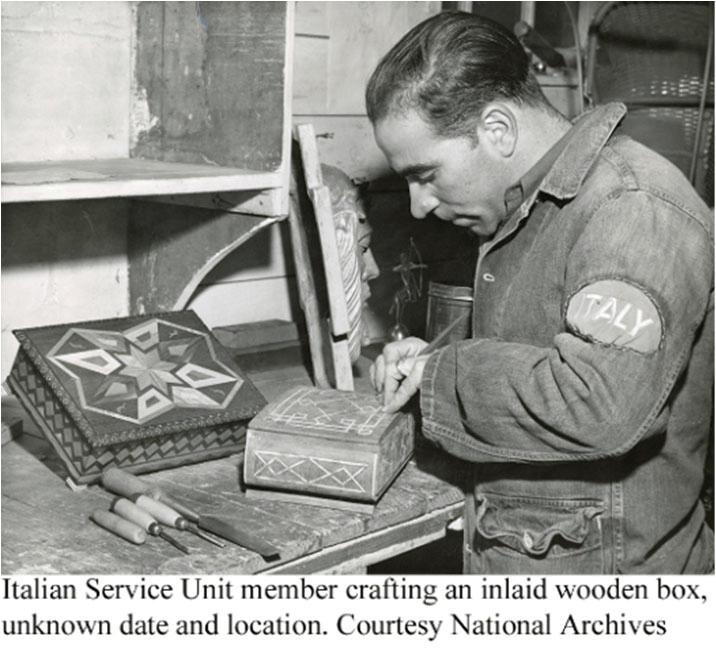
New York, The John D. Calandra Italian American Institute presents its exhibition designed by Polly Franchini Creativity and World War II Italian POWs in the United States, consisting of creative work made by Italian soldiers who were imprisoned by the Allied forces during World War II, with a focus on those held in the United States. These objects, often made from salvaged materials, ranged in size from a small inlaid ring to a large Catholic chapel
with a 65-foot bell tower. The exhibit is based on Dr. Laura E. Ruberto’s (Berkeley City College) research, including historical photographs, rare artefacts, written accounts, and oral testimonies. Dr. Ruberto co-curated the exhibition along with the Calandra Institute’s Dr. Joseph Sciorra.

On view Monday through Friday, 9am to 5pm. The Calandra Institute is located at 25 West 43rd St, 17th floor, in New York City

Download the flyer here

Call for Articles: Issue n. 8 (2025) – 1945. Close Encounters Between War and Peace

The Close Encounters in War Journal opens the call for submissions for the Issue n. 8 (2025)

Images of exuberant crowds gathering on VE Day and VJ Day from Piccadilly Circus in London to Times Square in New York City have long shaped collective memories of 1945 as the moment when evil totalitarian dictatorships were finally defeated. Thanks to the sacrifices of Allied soldiers and civilians in what has since become known as the “Good War” peace returned and democracy was re-established. It was all a marked difference to how the year had begun.

From the end of January 1945 onwards the discovery of Nazi extermination camps in Europe, most infamously at Auschwitz, exposed the full horror of the Holocaust. The U.S, British, and Soviet forces who liberated the camps found emaciated survivors, mass graves, gas chambers and laboratories for medical experiments on humans. In February, the Allied Strategic Bombing campaign against Germany reached its horrific crescendo when incendiary bombing killed tens of thousands in Dresden. And in eastern and central Europe civilians suffered enormously. It was estimated that on German territory alone some two million women and girls were raped. Many civilians decided to take their own lives to escape what they feared to be a more horrible fate.

Hitler’s suicide on 30th April and the fall of Berlin in early May heralded the German unconditional surrender. But in the Pacific Theatre the fighting continued. During the battle of Okinawa alone (April to June 1945) over 7,600 U.S. troops and some 42,000 civilians were killed in an operation intended to secure a base for what would likely be an even bloodier operation, the invasion of Japan itself. And here, too, Allied bombing exacted a destructive retribution on Imperial Japan: in Tokyo over 84,000 died in March as a consequence of firebombing, which left 16 square miles utterly destroyed. The two atomic bombs dropped on Hiroshima and Nagasaki in August – acts which remain controversial and much debated – likewise caused enormous death and devastation, but they also accelerated Japan’s surrender and the end of the hostilities globally.

Even as the final Allied victory approached, new challenges emerged. In February 1945, at Yalta in Crimea, the ”Big Three” – Roosevelt, Churchill and Stalin – outlined plans for the division of Germany, for the payment of reparations, and for Soviet participation in the war on the Pacific Front. And in July, the Potsdam conference saw the hardening of tensions among and between the Allies so that by 1946 the early outlines of what would become a Cold War between East and West had already started to emerge.

The monumental historiography generated by this conflict has reflected the political and cultural divisions between the belligerents and it has highlighted the troubled and divided memories that exist within participant nations. The earliest comprehensive histories of the Second World War emerged from the field of international relations, and they emphasize the political dimensions of the conflict with a strong focus on strategy and military concerns (e.g., Churchill 1948, Liddell Hart 1970, Calvocoressi and Wint 1972, Taylor 1961). Broader surveys surfaced in the 1980s and 1990s, which looked at themes such as life on the home front and the socio-economic dynamics of total mobilization, including cultural transformations (Keegan 1989, Willmott 1989, Kitchen 1990, Parker 1990, Ellis 1990). Today, scholars tend to integrate local and regional perspectives into overarching narratives (Knapp & Baldoli 2012, Bourque 2019). New sub-disciplines such as diplomatic history and the history of intelligence have helped shed light on some critical aspects such as the Soviet Union’s role in the Axis’ defeat (Beevor 1999, Overy 2012), whereas memory studies and oral history have helped look more closely at people’s experiences (Terkel 1984, Berger Gluck 1987, Summerfield 1998, Dodd 2023).

Issue n. 8 of the CEIWJ aims to investigate the close encounters that occurred in 1945 between war and peace, between civilians and combatants, between the personal and the political, and between past, present, and future. Dr Sam Edwards will join the editorial team as guest editor.

To do so, we invite the submission of articles focused on the investigation of 1945 from a broad spectrum of theoretical and critical perspectives in the fields of Comparative Literature, Cultural History, Ethics, Epistemology, Ethnology, Gender Studies, History of Art, History of Ideas, Linguistics, Memory Studies, Modern Languages, Oral History, Philosophy of Language, Postcolonial Studies, Psychology, Religion, Social Sciences, and Trauma Studies.

We invite, per the scientific purpose of the journal, contributions that focus on human dimensions and perspectives on this topic. The following aspects (among others) may be considered:

  • Diplomatic encounters;
  • Encounters between combatants from different belligerent countries;
  • Encounters between civilians and combatants;
  • Propaganda and ideology (e.g. political perspectives; racism; nationalism; religious fanaticism);
  • Ethical and moral aspects (e.g. personal development; self-understanding; the relation with the others; justification of violence; acceptance of suffering and death);
  • Anti-war attitudes (e.g. pacifism; criticism of violence; desertion and conscience objection; sabotage);
  • Personal narratives and trauma;
  • Decolonisation;
  • Military occupation;
  • Displacement and demobilisation;
  • Identity and diversity (e.g. gender; ethnicity; cultural heritage);

CEIWJ encourages inter/multidisciplinary approaches and dialogue among different scientific fields to promote discussion and scholarly research. The blending of different approaches will be warmly welcomed. Contributions from established scholars, early-career researchers, doctoral students, and practitioners who have dealt with or used personal narratives in the course of their activities will be considered. Case studies that include different geographic areas and non-Western contexts are warmly welcome.

The editors of the Close Encounters in War Journal invite the submission of abstracts of 250 words in English by 31 March 2025 to ceiwj@nutorevelli.org. The authors invited to submit their works will be required to send articles of 8,000-10,000 words (endnotes included, bibliographical references not included in word count), in English by 1 June 2025. All articles will undergo a process of double-blind peer review. We will notify you of the results of the review in September 2025. Final versions of revised articles will be submitted in November 2025. Please see the submission guidelines at: https://closeencountersinwar.org/instruction-for-authors-submissions/.
Download the CfA here

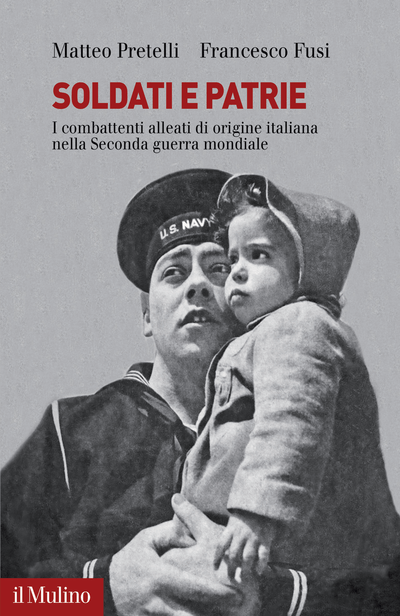
Book Review: Matteo Pretelli and Francesco Fusi, “Soldati e patrie. I combattenti alleati di origine italiana nella Seconda guerra mondiale”, Bologna, Il Mulino, 2023

By Gianluca Cinelli

The Allied armies fighting in the Second World War were an international and transcultural aggregation of Western, African, Southern American, and Asian soldiers. The main reason for the intercultural diversity in the French and British armies consisted of the extensive deployment of colonial troops on several fronts, from Europe to the Pacific, in the air and on the sea. Unlike their European Allies, the United States did not rely on a colonial empire and had only American troops to deploy in the war. However, the American armed forces were the mirror of American society, which included a variety of ethnic and cultural communities. The book Soldati e patrie (Soldiers and Fatherlands) offers remarkable insight into one particular aspect of this phenomenon, namely the presence of the Italians in the Allied armies, with a focus on the US Army.

Read the full text here

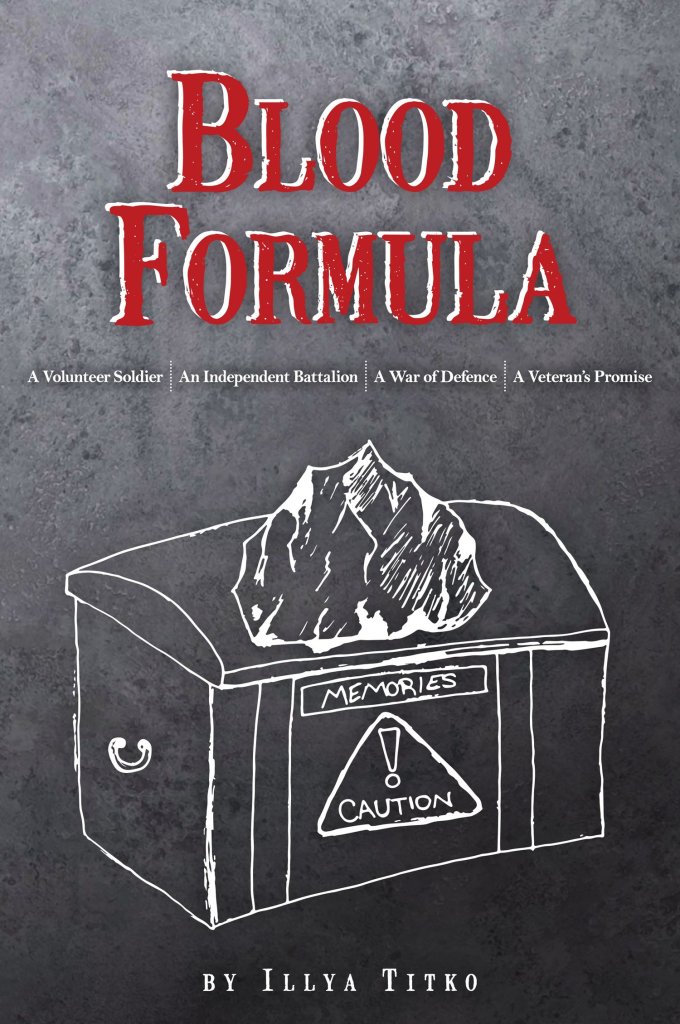
Book Review: Illya Titko, “Blood Formula”, translated by Jeffrey Stephaniuk, Regina, Benchmark Press, 2021, 210 p.

By Gianluca Cinelli

Senior Lieutenant Illya Titko is a combat veteran from Kalush, Ivano-Frankivsk Oblast, Ukraine. He was drafted in September 2015, or rather, he volunteered for the mobilization that was underway. Mr. Titko writes his book from the per­spective of a citizen-soldier, as a man who continued to maintain one foot firmly in the civilian world, even though his new environment was a war zone, and “war is when your entire world is turned upside down.”

Jeffrey Stephaniuk, the excellent translator of this book, introduces with these words the author (at p. 6), highlighting the perspective from which the whole story is told: that of a “citizen in arms”, a man who has answered the impellent call of duty when his country was in dire danger. Titko himself adds some remarks a few pages later:

It was not an easy task for me to write this book. It was a real inner struggle, for over a year, on whether I should write it or not. But I was pre-occupied with those past events, mulling that chaotic time over and over in my mind, conscious of the fact that it really wasn’t that long ago when I lived through them. There were nights when I couldn’t even sleep. I’d argue with myself: Should I or should I not write this book? I clearly understood that not only should I write this book, but it was nec­essary for this book be written. First, it was necessary so that everything I ex­perienced would have its place and not become lost in the subsequent living of my everyday life. I needed to write this book so that those who hadn’t been there personally could know about these events. I wanted them to know what happened and how they happened to those involved, with the people, with the country, and of course all those individuals who resolved to walk this same path, namely sol­diers defending their country. I realized that such a book would be necessary for children, grandchildren, and great grandchildren, so that they would have access to first-hand accounts about these difficult and stormy days and nights in the history of our nation. (12)

Read the review here

Launch of new journal section: “Back to the light. Stories of healing from trauma”

War affects our world and lives, whether we are directly involved or not. Its effects are like those of a disease that spreads through the organism, weakening it and altering its relationship with the environment. War destroys communities, poisons associated life, and builds walls. And, which is worse, it plants rotten seeds from which bitter fruits will grow. One antidote to the spread of its malice is listening to the stories of those who have seen its very Gorgon’s face and suffered from its scorching touch.

The Close Encounters in War Journal inaugurates a new section called Back to the light. Stories of healing from trauma. It is entirely devoted to the stories of people who have experienced the war and learned how to cope with the burden of its traumatic memories. Sharing these stories means much to the authors both in terms of ethical commitment and psychological effort. They reveal something intimate that has been troubling them, a core of traumatic memories that haunt their lives. Nonetheless, they are eager to share their stories worldwide with a public of interested and empathic readers, who want to listen and know what war is about.

We are happy to launch this project with two contributions by Ukrainian refugee Olga Kornyushyna and American former infantryman Charles Collins. Olga tells about her traumatic encounter with war as a civilian who had to flee from Kyiv, bombed by the Russians in the present war. Charles tells how he went through four turns of deployment overseas and how he had to fight to heal the moral wounds that such experiences inflicted on him.

The editors of the CEIWJ would like to express their profound gratitude to the authors of these stories and invite all who have stories of healing from war trauma to share them with us and our readers. Veterans, families, friends, therapists, and healers are welcome to submit their contributions.

Our gratitude also goes to Ed Tick, who has generously accepted to embark on this endeavour as co-editor of the Back to the light project, and the members of the section-specific editorial board, Charles Aishi Blocher, Kate Dahlstedt, Nathan Graeser, Lawrence Markworth, Donald McCasland, Glen Miller, Roxy Runyan, and Floyd Striegel.

Book launch: “Il ritorno del guerriero” by Edward Tick

Turin 5 May 2022, 6 pm; Cuneo 6 May 2022, 4.30 pm

American psychotherapist Edward Tick’s Warrior’s Return. Restoring the Soul after War (Sounds True, 2014) has been translated into Italian and published last March by Nerosubianco publisher with the title Il ritorno del guerriero. Guarire l’anima dopo la guerra.

The book will be launched on Thursday 5 May in Turin at 18:00. The Centre for Peace and Non-Violent Culture “Sereno Regis” will host the event. The author will join the event remotely to dialogue with the translators Gianluca Cinelli and Patrizia Piredda and answer the questions from the public.

The event can be attended remotely live on the host institution’s Youtube channel at https://www.youtube.com/c/serenoregistv.

The book will be launched again the following day (Friday 6 May) in Cuneo at 16:30. The event will be hosted by the Institute for the History of Italian Resistance in Cuneo (http://www.istitutoresistenzacuneo.it). The Italian translators and the publisher will be discussants.

Download the flyers here:

Book launch – Turin, 5 May, 18:00

Book launch – Cuneo, 6 May, 16:30

Exhibition in Florence: “Voices of Liberty: Allied Servicemembers of Italian Descent in WWII”

Tuesday April 5, 2022, at 2.30pm – Exhibit hall C.A. Ciampi, Palazzo del Pegaso, via de’ Pucci 16, Florence

Curators Matteo Pretelli and Francesco Fusi

Combatants of Italian descent were present in the various Allied armies that took part in World War II against the Axis Powers. They were mostly sons of emigrants who had left Italy between the late nineteenth and early twentieth centuries. Hundreds of thousands were Italian Americans serving in the U.S. military, but British Italians, Italian Canadians, Italian Australians, and Italian Brazilians also contributed to the war efforts of their countries. Being present in all theatres of the war, they also fought in Italy, a country that many knew only through the stories of their parents. The exhibition reconstructs this fascinating although neglected history by recounting the stories of these men who contributed to the Allied victory.

The exhibition will be open through April 22, 2022, Monday to Friday: 10 am-12 pm and 3-6 pm

Download the flyer here