When I visit my parents in the Cleveland suburbs, my 81-year-old father and I go to the West Side Market. The market is a Cleveland landmark, and has served produce, meats, bakery items, and prepared foods in an old, beautiful brick building for over a hundred years.
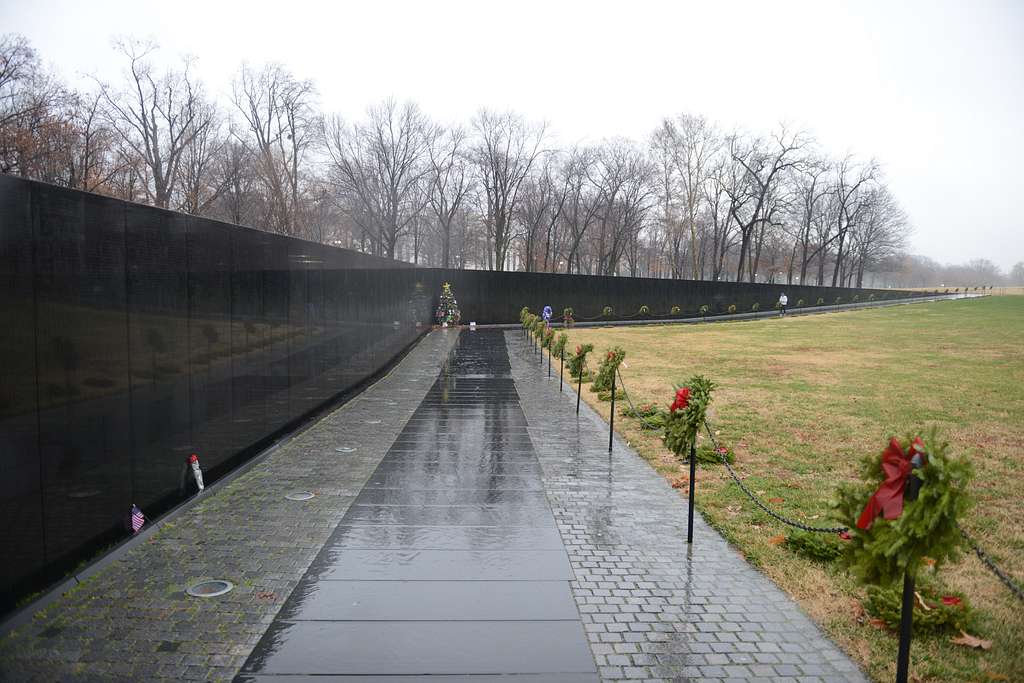
My dad goes to the market every week to pick up his beef, a loaf of wheat bread, and a treat or two – shrimp dip, gyro sandwiches, or apple strudel. He wears his “Vietnam Vet” baseball hat and people come up to thank him for his service – a strong contrast to his experience coming home from the war in 1970.
I’d long wanted to honor my dad and his war experience by writing a poem about our market trips. Then a few years ago, I worked with a therapist who asked me a surprising question – “Did you know you carry your dad’s fear from the war in your nervous system?” That left me weeping in the truth of it, and in relief. And it left me wondering what I could do to help ease our pain…
Karly Randolph Pitman is a writer, teacher, poet, presenter, and mental health facilitator who helps people nurture a more compassionate relationship with their struggles. She creates books, courses, presentations and trainings to bring insight to our human vulnerabilities, especially food suffering like overeating. In addition to her healing work, Karly is a published poet, writes a reader supported poetry newsletter, O Nobly Born, offers writing and mindfulness workshops to nurture self-awareness and self-compassion, and works with teens as a teacher and tutor. She lives in Austin, Texas with her family where she takes her sweet dog on leisurely bike rides and creates as much as possible with her hands. In all she remains in awe of the human heart.
Take me out of here! This pin gun flare behind your ear will blow your nose from this end. Drive asshole! Now, that we are clear of your black pajama cowboy boyfriends, let’s get real. You were setting me up.
Take me to the address on the paper I gave you. You wanted those cowboys to kill me and take my money. Well, asshole you picked the wrong guy. Now take me to that address or I will blow your head off and steal your taxi. I’m staying in Saigon tonight.
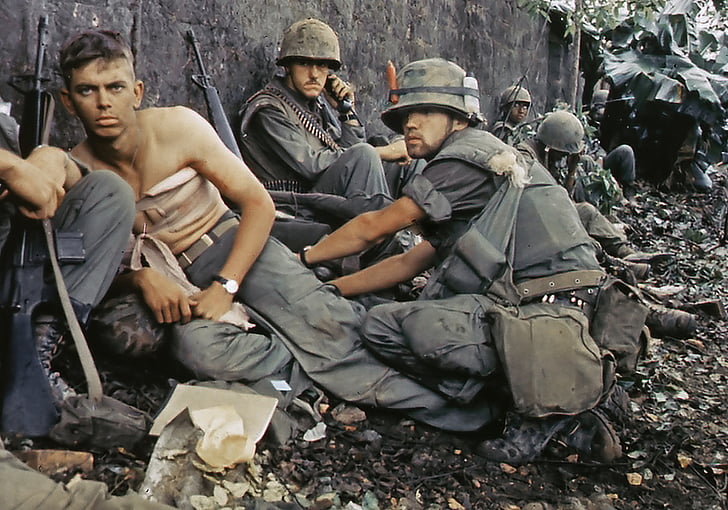
I remember getting out of the cab with pounding in my chest. Fearful and pumped. I was trying to meet up with my special bar girl. Her name is Mya, or at least that is what I call her at the bar. She takes good care of me. The bar girls are our main source of bought affection. Mya is my favorite. She is older, maybe twenty-eight. She supplies affection and tending for money. All the bar girls smell good and flirt with us. When you are thousands of miles from round eyed girls your age, Vietnamese bar girls are very desirable. They are in the war also. They sell their bodies for money to survive. Women have few legit jobs in the city. They make their money off G.I.s. that get time off and can get into Saigon. American CIA and government officials do not indulge in bar girls. They are big time. Most have a Vietnamese girl friend that they maintain in high style. I bet they do not write home about those arrangements…
A Yiddish proverb, as Auschwitz survivor Primo Levi recalls, says that it’s good to talk about bygone troubles. However, Yiddish culture can be profoundly ironic, and Primo Levi mastered the subtle art of understating. Troubles that one can tell belong in the past, yet they still linger on in the present as memories. Talking about bygone troubles is good because it means we saw them through. However, it does not mean that it is pleasant or easy. It takes courage and strength to face nightmarish and painful memories. Many of us remember the Ancient Mariner, who feels the compelling urge to stop people down the street and keep them listening to his guilt-ridden story full of horrors and fear. He acts like a madman, roaming the streets like an outcast, for he lives stuck in his haunting past and never finds his way back into society. The Ancient Mariner feels he must atone for his guilt of having killed the innocent albatross and survived in the place of his comrades, who died because of his hubris. Split as he is between past and present, the Ancient Mariner is no longer whole.
Talking about haunting memories is hard but necessary to lift their evil spell, as Edward Tick writes in the Foreword to this book by David T. Klein: “Warriors have their horrific ordeals and need their stories. Story is critical to warrior healing and restoration. To restore the warrior’s spirit, we must support her or him in ‘re-storying’. To disallow storytelling, as well-intentioned brief therapies do, is to betray the warrior by blocking necessary steps in their healing and homecoming” (p. 2).
Better you than me. I remembered the first time I heard that aphorism. It sounded callous and cruel, but that wasn’t the point. It reflected the stark reality and limited options imposed by the war and shone an uneasy glow upon our Darwinian nature. I was going to need a wise, experienced, and convincing teacher to help me not just see this darkness but understand it. One day, he simply showed up.
David Klein, Psy.D., is a U.S. Veterans Administration Psychologist.
2010 is when I began to become a veteran. It was more than 40 years after I had returned to the United States from Viet Nam. Forty years of madness, nightmares, drug abuse, suicide attempts. 2010 is when I began to speak about it. And write about it. And cry. 40 years of tears coming out all at once. I am still becoming a vet. My first piece of writing as I started to embrace my identity as a veteran, that I share here, was an open letter to my brothers and sisters of the wars in Afghanistan and Iraq. Though the numbers given derive from the original writing in 2010, my message and warning are still relevant to any warriors from any country and war struggling to return home after experiencing the horrors of combat and many difficulties of return.
Lawrence Markworth served in the US Navy between 1962 and 1966 and participated in the Vietnam War on the USS Castor. After struggling for decades with his traumatic memories, he eventually reconnected with his younger self, who had gone through the ordeal of war. We publish here a short autobiographical testimony of Lawrence’s journey, which was extracted from his forthcoming memoir Rowing through a Sea of Rubble.
San Fernando, CA: Tia Chucha Press, 2021. 187 pages
Seeking the most powerful healing practices to address the invisible wounds of war, Dr. Ed Tick has led journeys to Viet Nam for veterans, survivors, activists and pilgrims for the past twenty years. This moving and revelatory collection documents the people, places and experiences on these journeys. It illuminates the soul-searching and healing that occurs when Vietnamese women and children and veterans of every faction of the “American War” gather together to share storytelling and ritual, grieving, reconciliation and atonement. These poems reveal war’s aftermath for Vietnamese and Americans alike and their return to peace, healing and belonging in the very land torn by war’s horrors.
The Last Thing We Ever Do: Vietnam Era Veterans Speak Truth will be officially released on August 8 to coincide with the 57th anniversary of the passage of the Gulf of Tonkin Resolution
Warrior Songs third CD, The Last Thing We Ever Do: Vietnam Era Veterans Speak Truth, will be officially released on August 8 to coincide with the 57th anniversary of the passage of the Gulf of Tonkin Resolution. The CD, featuring 14 cuts, is a collaboration of 19 Vietnam vets with 21 professional musicians and songwriters to create an eclectic compilation of rock, jazz, blues, and blue grass-inspired stories of the war and its aftereffects. The project involved 81 studio musicians and 14 studios in the United States and Vietnam. A total of 109 artists, 17 of whom are Vietnamese, were involved in creating the CD. The diversity of musical styles mirrors the diversity of the stories, from the Selective Service System to combat to coping with returning to the U.S., civilian life, and moral injury. In all, the songs on the CD chart the three stages of war: “going, there, and back.”
Warrior Songs was founded in 2011 by Iraq War veteran Jason Moon, who, diagnosed with PTSD, attempted suicide. He began to write songs about his experiences, and in 2010 released the CD Trying to Find My Way Home. This led to performances at educational sessions for non-vets and veterans’ retreats, which in turn led to vets sharing their stories with him. He realized that music could be an agency of healing for others if he could transform the stories into songs with the help of professional musicians and songwriters. He founded Warrior Songs in 2011, and the first CD, If You Have to Ask . . ., with Moon as executive producer, was released in 2016. The CD Women at War: Warrior Songs Vol. 2 was released in 2018 and represents the first time in the history of modern music that a full length CD was created from the testimony of women veterans. Eighteen women veterans and two Gold Star family members supplied testimony. 17 songwriters and 64 professional musicians brought the songs to life. 13 engineers, working in recording studios across five states, created the final recordings. In total, “Warrior Songs Vol. 2: Women at War” was produced by the collaboration of 95 people, of whom 49 were women. Women at War won the Wisconsin Area Music Award Album of the Year for 2019.
Moon has long-range plans for Warrior Songs. Volume 4 featuring songs by veterans of color is scheduled for a 2023 release. Future themes are “Family, Friends, and Support,” “Native and Indigenous Voices,” “Injured and Disabled Veterans,” “Rainbow Warriors/LGBTQ ,” “Tales from the Combat Zone,” and “Women Veterans of Color.” By 2030 he hopes to release volumes 1 through 10 as a full box set. A supplementary 11th volume will explore the experiences of survivors of US wars.
The new CD, as well as volumes 1 and 2, are free for veterans and are available from Warriorsongs.org.
(text by Larry Abbott)
Excerpts from the CD songs (courtesy from Warrior Songs):
Conscription
I’ve seen the war on television, seems so far away.
It could be me there on the screen, could happen any day.
Rice paddies, helicopters, Agent Orange and a jungle trail,
Body bags and stretchers, all while the mothers wail.
And will they call my name?
When I learn my fate?
Will I come home again?
Oh, conscription.
(Lyrics: John Zutz & Danny Proud; Music: Lisa Johnson)
One steamy night, the summer of 1969, at Marble Mt. Air Base near Da Nang in Viet Nam, a rocket exploded near me and I died. There was screaming, explosions, dust, smoke, chaos; I had no torn flesh, no blood in the dust, but I died.
My flesh did not die but I had shattered. In death, I became a ghost. In life, a shadow. The ghost dominated the shadow. That domination has meant self-destructive behavior, an obsession with suicide and suicide attempts. Self destruction. Who, what is self? My body? My heart? My spirit? I had to destroy all that might be self. I had to destroy self completely, my complete self, even though there was no complete me.





 Close Encounters in War