By Gianluca Cinelli

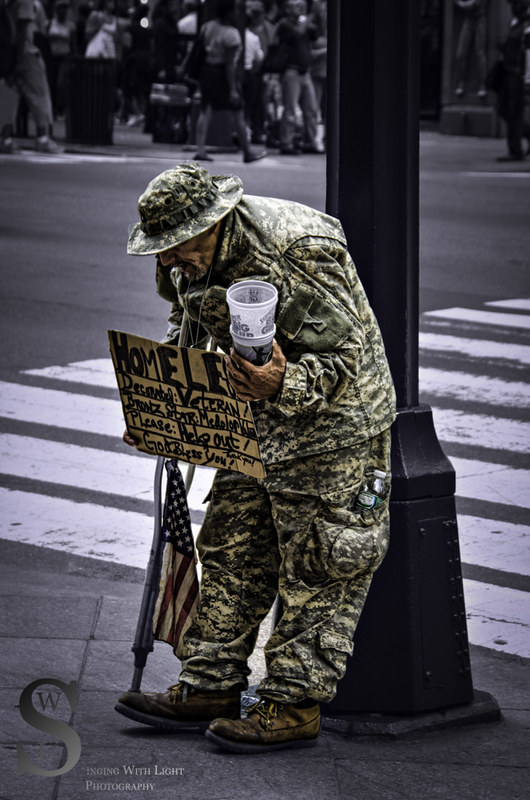
America has struggled to reintegrate soldiers returning from overseas since the Second World War, as John Houston’s documentary, Let There Be Light (1946), shows. Houston’s film, initially rejected by the military, was broadcast only in 1981- that is, by no chance, one year after the American Psychiatric Association had coined the famous acronym PTSD. For decades, the problem of psychologically injured veterans remained taboo within the military, and those affected by posttraumatic syndromes were forced to hide their pain away, deal with it alone, and pretend they were strong and never in need of help. By the early 1980s, though, the US were flooded with traumatised veterans from Vietnam, who struggled to go back to their civilian status and find their rightful place in society. Many of them became homeless, addicted to drugs and alcohol, as their families broke up and their social bonds dissolved. A recent report states that “despite comprising less than seven percent of the United States’ adult population, veterans make up over eight percent of the incarcerated population within United States jails and prisons” (Gallagher 2026). As the US engaged actively in international wars since 1991, deploying tens of thousands of servicemen and servicewomen overseas, the number of veterans returning with physical, psychological and spiritual injuries increased dramatically.
[…]
The Veterans Journey Home project is an initiative of Warrior Films, consisting of five documentaries written and shot by director Frederick Marx. The five documentaries, available on the Warrior Films’ website (https://warriorfilms.org/veterans-journey-home-2/), are Solutions (15 minutes), Ben’s Story (53 minutes), Kalani’s Story (30 minutes), On Black Mountain (49 minutes), and Leaving it on the Land (80 minutes). Each of them explores one aspect of war trauma in veterans, with and without combat experience. By letting the protagonists of his stories speak directly, Marx unfolds touching narratives that trigger empathy and compassion, not only for the veterans but also for their friends and families…