The Legacy of the Vietnam War in a Poem: “Market Day” by Karly Randolph Pitman

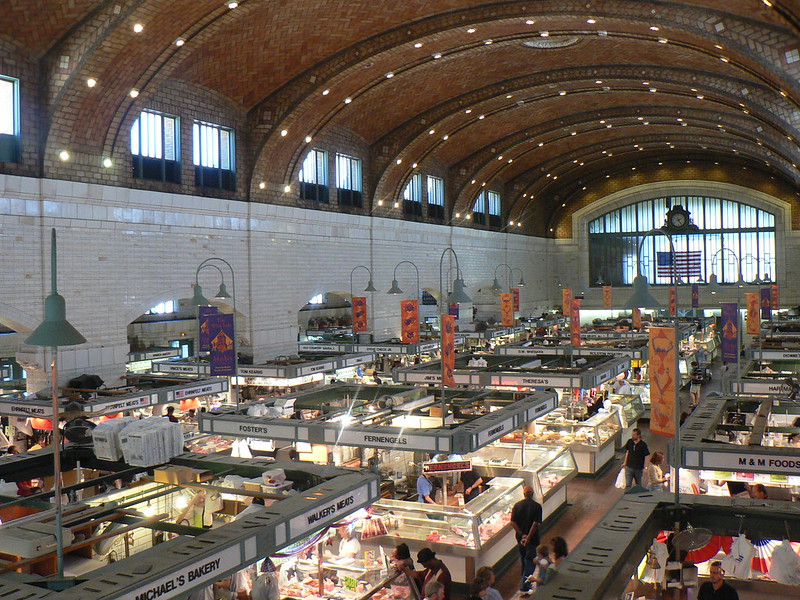
When I visit my parents in the Cleveland suburbs, my 81-year-old father and I go to the West Side Market. The market is a Cleveland landmark, and has served produce, meats, bakery items, and prepared foods in an old, beautiful brick building for over a hundred years.

My dad goes to the market every week to pick up his beef, a loaf of wheat bread, and a treat or two – shrimp dip, gyro sandwiches, or apple strudel. He wears his “Vietnam Vet” baseball hat and people come up to thank him for his service – a strong contrast to his experience coming home from the war in 1970.

I’d long wanted to honor my dad and his war experience by writing a poem about our market trips. Then a few years ago, I worked with a therapist who asked me a surprising question – “Did you know you carry your dad’s fear from the war in your nervous system?” That left me weeping in the truth of it, and in relief. And it left me wondering what I could do to help ease our pain…

Read the full story and Market Day poem here

Karly Randolph Pitman is a writer, teacher, poet, presenter, and mental health facilitator who helps people nurture a more compassionate relationship with their struggles. She creates books, courses, presentations and trainings to bring insight to our human vulnerabilities, especially food suffering like overeating. In addition to her healing work, Karly is a published poet, writes a reader supported poetry newsletter, O Nobly Born, offers writing and mindfulness workshops to nurture self-awareness and self-compassion, and works with teens as a teacher and tutor. She lives in Austin, Texas with her family where she takes her sweet dog on leisurely bike rides and creates as much as possible with her hands. In all she remains in awe of the human heart.

Book Review: “A Veteran’s Toughest Fight. Finding Peace After Vietnam”, by David T. Klein, Jefferson, McFarland, 2024

By Gianluca Cinelli

A Yiddish proverb, as Auschwitz survivor Primo Levi recalls, says that it’s good to talk about bygone troubles. However, Yiddish culture can be profoundly ironic, and Primo Levi mastered the subtle art of understating. Troubles that one can tell belong in the past, yet they still linger on in the present as memories. Talking about bygone troubles is good because it means we saw them through. However, it does not mean that it is pleasant or easy. It takes courage and strength to face nightmarish and painful memories. Many of us remember the Ancient Mariner, who feels the compelling urge to stop people down the street and keep them listening to his guilt-ridden story full of horrors and fear. He acts like a madman, roaming the streets like an outcast, for he lives stuck in his haunting past and never finds his way back into society. The Ancient Mariner feels he must atone for his guilt of having killed the innocent albatross and survived in the place of his comrades, who died because of his hubris. Split as he is between past and present, the Ancient Mariner is no longer whole.

Talking about haunting memories is hard but necessary to lift their evil spell, as Edward Tick writes in the Foreword to this book by David T. Klein: “Warriors have their horrific ordeals and need their stories. Story is critical to warrior healing and restoration. To restore the warrior’s spirit, we must support her or him in ‘re-storying’. To disallow storytelling, as well-intentioned brief therapies do, is to betray the warrior by blocking necessary steps in their healing and homecoming” (p. 2).

Published by McFarland (McFarlandBooks.com)

Read the full text here