
Veterans Voyage Home. Five Documentaries by Frederick Marx

By Gianluca Cinelli

America has struggled to reintegrate soldiers returning from overseas since the Second World War, as John Houston’s documentary, Let There Be Light (1946), shows. Houston’s film, initially rejected by the military, was broadcast only in 1981- that is, by no chance, one year after the American Psychiatric Association had coined the famous acronym PTSD. For decades, the problem of psychologically injured veterans remained taboo within the military, and those affected by posttraumatic syndromes were forced to hide their pain away, deal with it alone, and pretend they were strong and never in need of help. By the early 1980s, though, the US were flooded with traumatised veterans from Vietnam, who struggled to go back to their civilian status and find their rightful place in society. Many of them became homeless, addicted to drugs and alcohol, as their families broke up and their social bonds dissolved. A recent report states that “despite comprising less than seven percent of the United States’ adult population, veterans make up over eight percent of the incarcerated population within United States jails and prisons” (Gallagher 2026). As the US engaged actively in international wars since 1991, deploying tens of thousands of servicemen and servicewomen overseas, the number of veterans returning with physical, psychological and spiritual injuries increased dramatically.

[…]

The Veterans Journey Home project is an initiative of Warrior Films, consisting of five documentaries written and shot by director Frederick Marx. The five documentaries, available on the Warrior Films’  website (https://warriorfilms.org/veterans-journey-home-2/), are Solutions (15 minutes), Ben’s Story (53 minutes), Kalani’s Story (30 minutes), On Black Mountain (49 minutes), and Leaving it on the Land (80 minutes). Each of them explores one aspect of war trauma in veterans, with and without combat experience. By letting the protagonists of his stories speak directly, Marx unfolds touching narratives that trigger empathy and compassion, not only for the veterans but also for their friends and families…
Read the full text HERE

On Becoming a Veteran

By Everett Cox

2010 is when I began to become a veteran. It was more than 40 years after I had returned to the United States from Viet Nam. Forty years of madness, nightmares, drug abuse, suicide attempts. 2010 is when I began to speak about it. And write about it. And cry. 40 years of tears coming out all at once. I am still becoming a vet. My first piece of writing as I started to embrace my identity as a veteran, that I share here, was an open letter to my brothers and sisters of the wars in Afghanistan and Iraq. Though the numbers given derive from the original writing in 2010, my message and warning are still relevant to any warriors from any country and war struggling to return home after experiencing the horrors of combat and many difficulties of return.

Read the full story here

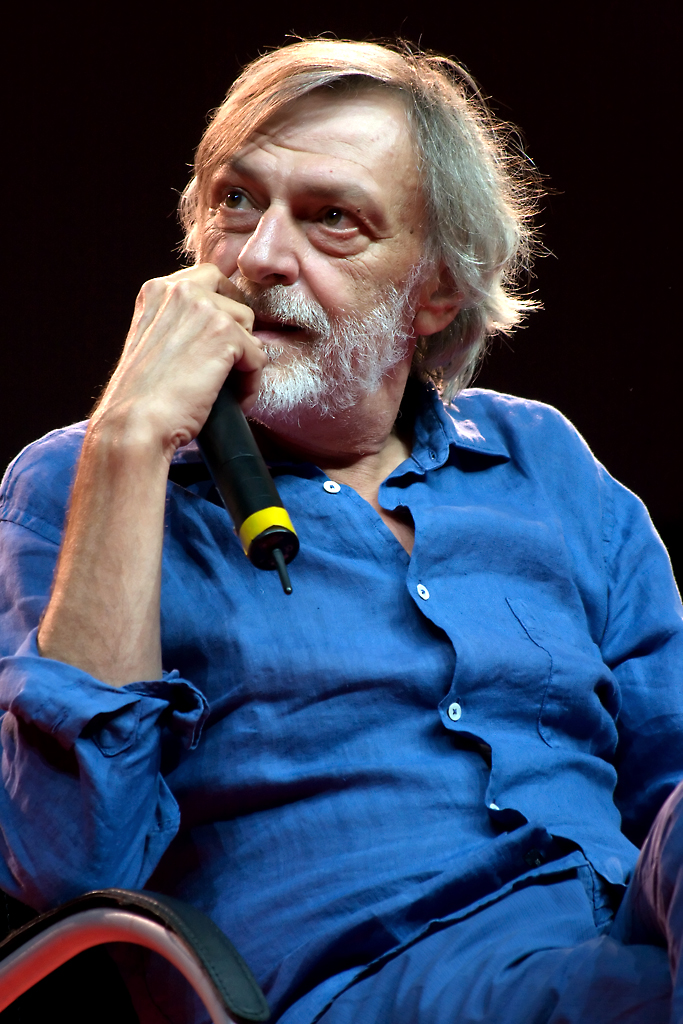
Obituary: “I am not a pacifist. I am against the war”. Gino Strada (1948-2021)

Gino Strada, 10 Settembre 2010, Mandela Forum, 9th National Congress of Emergency, Florence ©maso83

One of the most noticeable people in the field of solidarity has left us: Gino Strada, founder of the NGO Emergency in 1994, which guaranteed free medical and surgical care to the victims of wars and poverty, and a critical spirit against the corruption of Italian health, and the EU arms trade policy.

Gino Strada graduated in Medicine and Surgery at the State University of Milan in 1978, at the age of 30, and specialized in emergency surgery. From 1988 he worked with the Red Cross to assist the war wounded. Then in 1994, together with his wife Teresa Sarti, Strada founded the NGO Emergency, which in 2006 was recognized as a partner of the United Nations. From 2015 he became a member of the Economic and Social Council of the United Nations (ECOSOC) and, in 2018, an official partner of the European Union Civil Protection and Humanitarian Aid.

In 1999 he published the book Green Parrots (Pappagalli verdi). He recounts there the stories of injured and mutilated adults and children, whom he tended as a civilian war surgeon during the wars in Iraq, Pakistan, Rwanda, Afghanistan, Peru, Kurdistan, Ethiopia, Angola, Cambodia, ex-Yugoslavia, and Djibouti.

Gino Strada was a determined and moral person, a teacher of humanity and a tireless peace activist. He devoted his life to realizing the dream of a world without wars, following in Einstein’s steps, who claimed that “war cannot be humanized, it can only be abolished”.

Gino Strada said:

If one of us, any human being, is suffering like a dog right now, is sick or hungry, it affects us all. It must concern us all, because ignoring human suffering is always an act of violence, and one of the most cowardly.

I believe that war is something that represents the greatest shame of humanity. And I think that the human brain must develop to the point of rejecting this tool as inhuman.