Call for Articles. Issue n. 9 (2026): Against War. Conflict Resolution, Peace, and Nonviolence

The Editors of the Close Encounters in War Journal announce that the call for articles for Issue n. 9 (2026) is now open.

Issue n. 9 of the CEIWJ aims to investigate the interdependence of war and peace from the perspective of close encounters. The editors invite the submission of articles investigating the idea of peace, broadly understood, to include the absence of war but also being against war from a vast spectrum of theoretical and critical perspectives in the fields of Cultural History, Memory Studies, Modern Languages, Oral History, Philosophy of Language, Postcolonial Studies, Psychology, Religion, Social Sciences, Ethics, Comparative Literature, Cinema and Media Studies, Gender Studies, History of Art, History of Ideas, Curriculum Studies, Linguistics, and Trauma Studies.

The editors encourage the blending of different approaches. Contributions from established scholars, early-career researchers, doctoral students, and practitioners will be considered. Case studies that include different geographic areas and non-Western contexts are warmly welcome.

The editors of the CEIWJ invite the submission of abstracts of 250 words in English by 1 March 2026 to ceiwj@nutorevelli.org. The authors invited to submit their works will be required to send articles of 8,000-10,000 words (endnotes included, bibliographical references not included in word count), in English by 20 May 2026. All articles will undergo a process of double-blind peer review. We will notify you of the results of the review in September 2026. Final versions of revised articles will be submitted in autumn 2026. All manuscripts must adhere to the Journal’s style-sheet available at  https://closeencountersinwar.org/instruction-for-authors-submissions/.
Download the Call for Articles in PDF

Obituary: “I am not a pacifist. I am against the war”. Gino Strada (1948-2021)

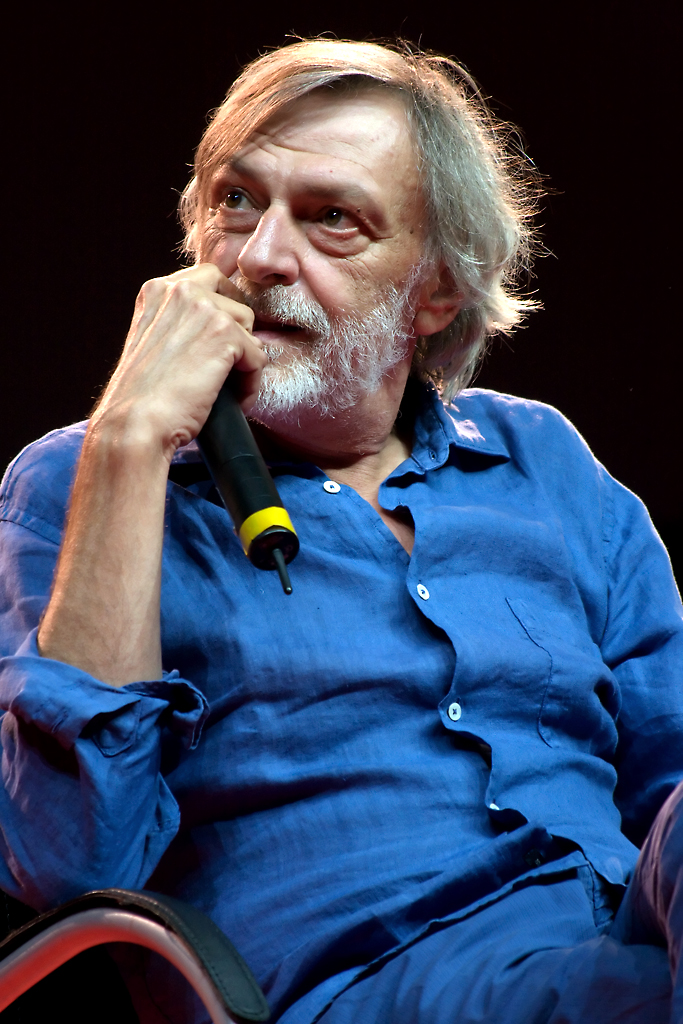
Gino Strada, 10 Settembre 2010, Mandela Forum, 9th National Congress of Emergency, Florence ©maso83

One of the most noticeable people in the field of solidarity has left us: Gino Strada, founder of the NGO Emergency in 1994, which guaranteed free medical and surgical care to the victims of wars and poverty, and a critical spirit against the corruption of Italian health, and the EU arms trade policy.

Gino Strada graduated in Medicine and Surgery at the State University of Milan in 1978, at the age of 30, and specialized in emergency surgery. From 1988 he worked with the Red Cross to assist the war wounded. Then in 1994, together with his wife Teresa Sarti, Strada founded the NGO Emergency, which in 2006 was recognized as a partner of the United Nations. From 2015 he became a member of the Economic and Social Council of the United Nations (ECOSOC) and, in 2018, an official partner of the European Union Civil Protection and Humanitarian Aid.

In 1999 he published the book Green Parrots (Pappagalli verdi). He recounts there the stories of injured and mutilated adults and children, whom he tended as a civilian war surgeon during the wars in Iraq, Pakistan, Rwanda, Afghanistan, Peru, Kurdistan, Ethiopia, Angola, Cambodia, ex-Yugoslavia, and Djibouti.

Gino Strada was a determined and moral person, a teacher of humanity and a tireless peace activist. He devoted his life to realizing the dream of a world without wars, following in Einstein’s steps, who claimed that “war cannot be humanized, it can only be abolished”.

Gino Strada said:

If one of us, any human being, is suffering like a dog right now, is sick or hungry, it affects us all. It must concern us all, because ignoring human suffering is always an act of violence, and one of the most cowardly.

I believe that war is something that represents the greatest shame of humanity. And I think that the human brain must develop to the point of rejecting this tool as inhuman.