Military Mental Health in the Ukraine-Russia War. Interview with Capt. Oleh Hukovskyy (MD) of the Ukrainian Armed Forces

By Edward Tick and Gianluca Cinelli
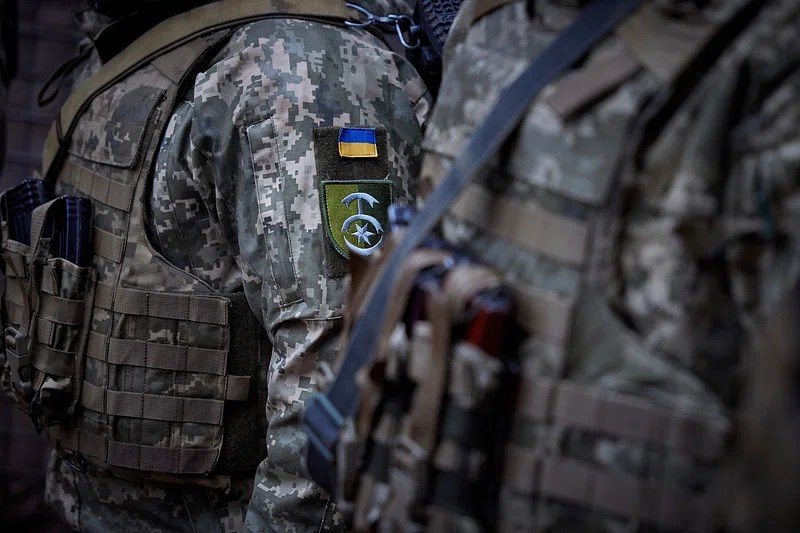
Ukrainian troops. Public domain

Since 24th February 2022, Ukraine has been fighting for its independence and survival as a free nation. However, the conflict with Russia had already begun years before with the Russian annexation of the Crimean Peninsula in 2013. The war has so far caused immense devastation and loss in Ukraine. Dr Edward Tick and Dr Gianluca Cinelli conducted an interview with the Chief of Combat Stress Control Group Capt. Oleh Hukovskyy on 9th May 2024. The interview touches upon topics such as the treatment of psychological stress and trauma among the Ukrainian troops and the importance of this support for combat personnel on the frontline and immediately behind the lines. By publishing this interview, the Editorial Team of the Close Encounters in War Journal express their solidarity with the people of Ukraine and hope to see the war’s end very soon.

Send me to the interview

Book Review: “A Veteran’s Toughest Fight. Finding Peace After Vietnam”, by David T. Klein, Jefferson, McFarland, 2024

By Gianluca Cinelli

A Yiddish proverb, as Auschwitz survivor Primo Levi recalls, says that it’s good to talk about bygone troubles. However, Yiddish culture can be profoundly ironic, and Primo Levi mastered the subtle art of understating. Troubles that one can tell belong in the past, yet they still linger on in the present as memories. Talking about bygone troubles is good because it means we saw them through. However, it does not mean that it is pleasant or easy. It takes courage and strength to face nightmarish and painful memories. Many of us remember the Ancient Mariner, who feels the compelling urge to stop people down the street and keep them listening to his guilt-ridden story full of horrors and fear. He acts like a madman, roaming the streets like an outcast, for he lives stuck in his haunting past and never finds his way back into society. The Ancient Mariner feels he must atone for his guilt of having killed the innocent albatross and survived in the place of his comrades, who died because of his hubris. Split as he is between past and present, the Ancient Mariner is no longer whole.

Talking about haunting memories is hard but necessary to lift their evil spell, as Edward Tick writes in the Foreword to this book by David T. Klein: “Warriors have their horrific ordeals and need their stories. Story is critical to warrior healing and restoration. To restore the warrior’s spirit, we must support her or him in ‘re-storying’. To disallow storytelling, as well-intentioned brief therapies do, is to betray the warrior by blocking necessary steps in their healing and homecoming” (p. 2).

Published by McFarland (McFarlandBooks.com)

Read the full text here

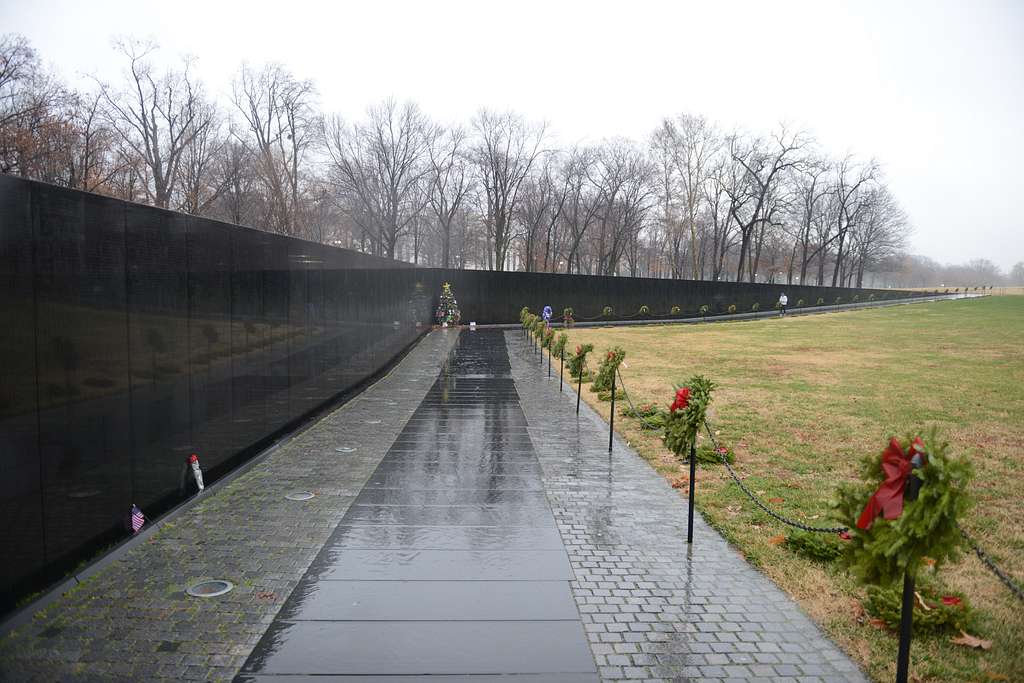
A testimony: “The Wall” by Lawrence Markworth

Lawrence Markworth served in the US Navy between 1962 and 1966 and participated in the Vietnam War on the USS Castor. After struggling for decades with his traumatic memories, he eventually reconnected with his younger self, who had gone through the ordeal of war. We publish here a short autobiographical testimony of Lawrence’s journey, which was extracted from his forthcoming memoir Rowing through a Sea of Rubble.

Read The Wall by Lawrence Markworth

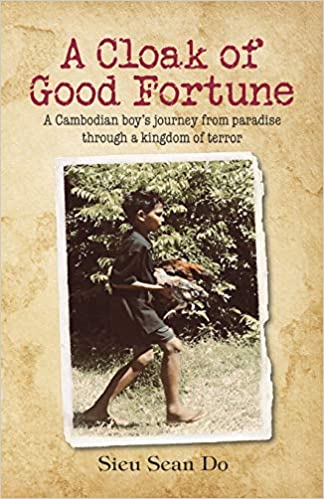
Book review: “A Cloak of Good Fortune. A Cambodian Boy’s Journey From Paradise Through a Kingdom of Terror”, by Sieu Sean Do. San Francisco, Hibiscus Press, 2019

By Edward Tick

“This is too much! It seems like I just get over one crisis and another occurs. I need to piece my soul together.” So blurted author Sieu Sean Do’s mother after the family’s harrowing and narrow escape into Viet Nam from the Khmer Rouge genocide in their native Cambodia. Sieu Sean’s memoir of the family’s journey from an idyllic childhood in rural Cambodia through the hell of the Killing Fields is his work through witnessing and storytelling to piece his soul together.

Sieu’s narrative of the family’s long ordeal is largely straightforward. He was a child and teenager during these ordeals, so we see them through the innocent boy’s eyes. The narrative piles incident upon incident as challenges, crises, betrayals, disappointments, abandonments, starvation, crimes, executions, and accidental deaths cascade not only upon this family, but all of Cambodia. Yet the story takes us to Cambodian traditions and intimately into his large extended family that, miraculously, survived together. As he summarizes at the end, “Our elders taught us well that we need to survive not just alone, but together.” Thus, as readers we have close encounters not just with the horrors of genocide, but the intimacies of a traditional Cambodian family and many traditional practices and folk tales that surround and support the survivors in their ordeals.

Read the full text here

Book launch: “Il ritorno del guerriero” by Edward Tick

Turin 5 May 2022, 6 pm; Cuneo 6 May 2022, 4.30 pm

American psychotherapist Edward Tick’s Warrior’s Return. Restoring the Soul after War (Sounds True, 2014) has been translated into Italian and published last March by Nerosubianco publisher with the title Il ritorno del guerriero. Guarire l’anima dopo la guerra.

The book will be launched on Thursday 5 May in Turin at 18:00. The Centre for Peace and Non-Violent Culture “Sereno Regis” will host the event. The author will join the event remotely to dialogue with the translators Gianluca Cinelli and Patrizia Piredda and answer the questions from the public.

The event can be attended remotely live on the host institution’s Youtube channel at https://www.youtube.com/c/serenoregistv.

The book will be launched again the following day (Friday 6 May) in Cuneo at 16:30. The event will be hosted by the Institute for the History of Italian Resistance in Cuneo (http://www.istitutoresistenzacuneo.it). The Italian translators and the publisher will be discussants.

Download the flyers here:

Book launch – Turin, 5 May, 18:00

Book launch – Cuneo, 6 May, 16:30

Review: “Coming Home in Viet Nam”. Poems by Edward Tick

San Fernando, CA: Tia Chucha Press, 2021. 187 pages

Seeking the most powerful healing practices to address the invisible wounds of war, Dr. Ed Tick has led journeys to Viet Nam for veterans, survivors, activists and pilgrims for the past twenty years. This moving and revelatory collection documents the people, places and experiences on these journeys. It illuminates the soul-searching and healing that occurs when Vietnamese women and children and veterans of every faction of the “American War” gather together to share storytelling and ritual, grieving, reconciliation and atonement. These poems reveal war’s aftermath for Vietnamese and Americans alike and their return to peace, healing and belonging in the very land torn by war’s horrors.

Download and read the review of the book here

Military Trauma. The Sacred Wound and the Warrior’s Journey Home

A free seminar by Dr. Edward Tick. May 14, 2021

Post-traumatic stress disorder (PTSD) and Moral Injury have proven to be of epidemic proportions in our military and veteran populations but very difficult to treat. Healing efforts must not merely strive for symptom reduction and control but match the transformed inner worlds, life experiences and values of the survivors, provide corrective experiences that counteract the traumas, and offer a life and growth path consistent with military service. Our training day will present Dr. Tick’s proven “Soldier’s Heart” holistic and psycho-spiritual-communal model for the understanding and practices that bring true healing, homecoming and transformation to our military and veterans.

Participants will:

  1. Be able to present relevant lessons from world warrior traditions.
  2. Understand the sacred and moral dimensions of military service and warriorhood.
  3. Gain a holistic understanding of Post-traumatic stress disorder.
  4. Understand and be able to apply the concept of soul wounding to PTSD and Moral Injury.
  5. Understand and be able to report the Necessities of Warrior Return.
  6. Understand the Soldier’s Heart Transformational Model and Path of Homecoming and apply it to direct work with veterans.
  7. Understand the concept of Moral Injury and be able to offer strategies for Healing and Recovery.
  8. Understand and apply the concept of restoring the warrior archetype.

Download the full program of the seminar with link to register here

“The Emotions after War in Viet Nam. Poetry from my Reconciliation and Healing Journeys”, by Edward Tick

Seeking the most comprehensive and holistic healing of war wounds possible, I have been leading annual reconciliation journeys to Viet Nam for veterans and other war survivors every year since the twenty-fifth anniversary of the end of the war in 2000. Encounters between survivors of all sides squeeze long-ago memories and feelings out of American and Vietnamese alike. Through poetry I record the voices and stories of women and men who lived through extraordinarily close encounters during war and again on meeting today. These encounters show the depths and complexities of our emotional lives during times of warfare and its aftermath when we can transform fear and hatred into understanding, compassion and love.

Read Ed’s poems here

Dòng suối quê hương (The Streams of Our Native Land): a poem by Trần Đình Song

Dear readers of Close Encounters in War, we are delighted to publish another poetic contribution about the Vietnam war, this time from the perspective of a Vietnamese veteran: Trần Đình Song, who served in the Southern Vietnamese Air Force and was in the re-education forced labour camps after the war. This beautiful poem was written in 1966, and although the horror of civil war war haunted the Author and his country, his words are full of love and hope. We publish the poem in its original version, accompanied by the new English translation that the Author made with his friend and member of the CEIWJ Editorial Board Edward Tick.

Dòng suối quê hương (The Streams of Our Native Land), by Trần Đình Song

New publication: “Community, Diversity and Reconciliation in Remote Vietnamese Villages” by Edward Tick

Survive & Thrive: A Journal for Medical Humanities and Narrative as Medicine, 5, 2 (2020)

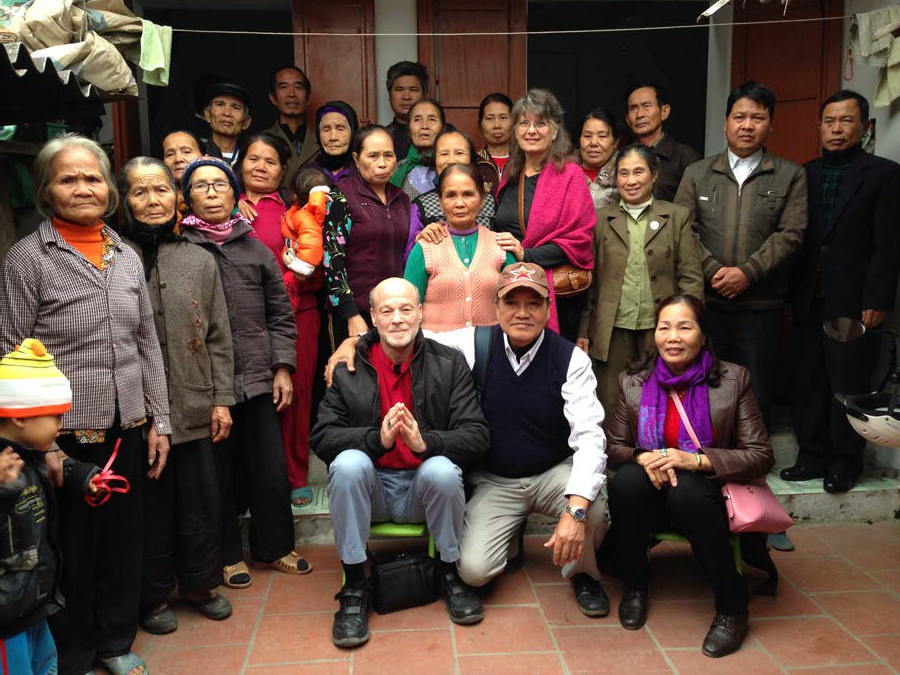
Meeting with the non-combatant Pioneer Women and Men who worked the
dangerous and heavily bombed Ho Chi Minh Trail during the war. The author is sitting next to Tran Dinh Song, a southern air force veteran; Kate Dahlstedt, therapist, is standing behind.

ABSTRACT

The American War in Viet Nam created
significant divisions among their population. Factions include southern Army of
the Republic of Viet Nam (ARVN) veterans, northern People’s Republic or North
Vietnamese Army (NVA) veterans, Viet Cong (VC)veterans who were essentially
militia, non-combatant Pioneers – largely women, Agent Orange victims. All
these are now treated as one people, one family. Some government prejudice and
denial of benefits remains toward ARVN vets, but as we will see not among the
common people. We turn to our American experiences in the Viet Nam of today of
otherness, differentness, moral responsibility for the war, the possibilities of
reconciliation between former foes. How do the Vietnamese experience us? And
what is our experience of being the outsiders from our country that formerly
invaded this land?

Download the open-access article as PDF for free HERE.

Poet, author, psychotherapist and international activist and guide, Edward Tick,
Ph.D., (www.edwardtick.com) is author of four nonfiction books, including War
and the Soul, and two volumes of poetry. A specialist in war and trauma healing
and the cultures of Viet Nam and Greece, Ed uses the humanities, literature,
cross-cultural and ancient psycho-spiritual-cultural practices for healing.