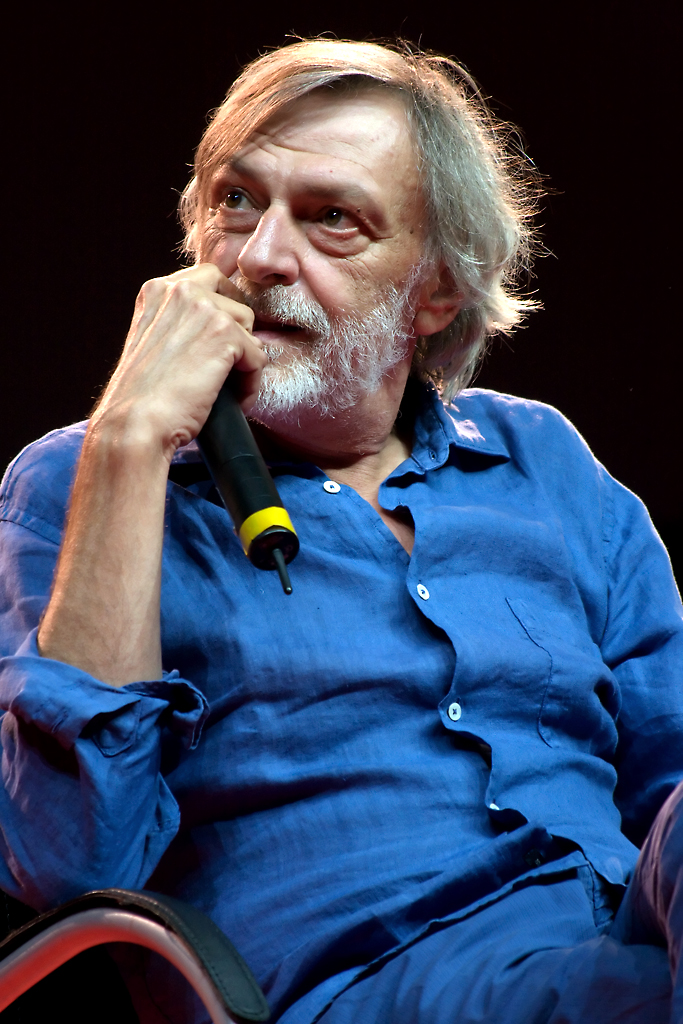
One of the most noticeable people in the field of solidarity has left us: Gino Strada, founder of the NGO Emergency in 1994, which guaranteed free medical and surgical care to the victims of wars and poverty, and a critical spirit against the corruption of Italian health, and the EU arms trade policy.
Gino Strada graduated in Medicine and Surgery at the State University of Milan in 1978, at the age of 30, and specialized in emergency surgery. From 1988 he worked with the Red Cross to assist the war wounded. Then in 1994, together with his wife Teresa Sarti, Strada founded the NGO Emergency, which in 2006 was recognized as a partner of the United Nations. From 2015 he became a member of the Economic and Social Council of the United Nations (ECOSOC) and, in 2018, an official partner of the European Union Civil Protection and Humanitarian Aid.
In 1999 he published the book Green Parrots (Pappagalli verdi). He recounts there the stories of injured and mutilated adults and children, whom he tended as a civilian war surgeon during the wars in Iraq, Pakistan, Rwanda, Afghanistan, Peru, Kurdistan, Ethiopia, Angola, Cambodia, ex-Yugoslavia, and Djibouti.
Gino Strada was a determined and moral person, a teacher of humanity and a tireless peace activist. He devoted his life to realizing the dream of a world without wars, following in Einstein’s steps, who claimed that “war cannot be humanized, it can only be abolished”.
Gino Strada said:
If one of us, any human being, is suffering like a dog right now, is sick or hungry, it affects us all. It must concern us all, because ignoring human suffering is always an act of violence, and one of the most cowardly.
I believe that war is something that represents the greatest shame of humanity. And I think that the human brain must develop to the point of rejecting this tool as inhuman.
The Last Thing We Ever Do: Vietnam Era Veterans Speak Truth will be officially released on August 8 to coincide with the 57th anniversary of the passage of the Gulf of Tonkin Resolution
Warrior Songs third CD, The Last Thing We Ever Do: Vietnam Era Veterans Speak Truth, will be officially released on August 8 to coincide with the 57th anniversary of the passage of the Gulf of Tonkin Resolution. The CD, featuring 14 cuts, is a collaboration of 19 Vietnam vets with 21 professional musicians and songwriters to create an eclectic compilation of rock, jazz, blues, and blue grass-inspired stories of the war and its aftereffects. The project involved 81 studio musicians and 14 studios in the United States and Vietnam. A total of 109 artists, 17 of whom are Vietnamese, were involved in creating the CD. The diversity of musical styles mirrors the diversity of the stories, from the Selective Service System to combat to coping with returning to the U.S., civilian life, and moral injury. In all, the songs on the CD chart the three stages of war: “going, there, and back.”
Warrior Songs was founded in 2011 by Iraq War veteran Jason Moon, who, diagnosed with PTSD, attempted suicide. He began to write songs about his experiences, and in 2010 released the CD Trying to Find My Way Home. This led to performances at educational sessions for non-vets and veterans’ retreats, which in turn led to vets sharing their stories with him. He realized that music could be an agency of healing for others if he could transform the stories into songs with the help of professional musicians and songwriters. He founded Warrior Songs in 2011, and the first CD, If You Have to Ask . . ., with Moon as executive producer, was released in 2016. The CD Women at War: Warrior Songs Vol. 2 was released in 2018 and represents the first time in the history of modern music that a full length CD was created from the testimony of women veterans. Eighteen women veterans and two Gold Star family members supplied testimony. 17 songwriters and 64 professional musicians brought the songs to life. 13 engineers, working in recording studios across five states, created the final recordings. In total, “Warrior Songs Vol. 2: Women at War” was produced by the collaboration of 95 people, of whom 49 were women. Women at War won the Wisconsin Area Music Award Album of the Year for 2019.
Moon has long-range plans for Warrior Songs. Volume 4 featuring songs by veterans of color is scheduled for a 2023 release. Future themes are “Family, Friends, and Support,” “Native and Indigenous Voices,” “Injured and Disabled Veterans,” “Rainbow Warriors/LGBTQ ,” “Tales from the Combat Zone,” and “Women Veterans of Color.” By 2030 he hopes to release volumes 1 through 10 as a full box set. A supplementary 11th volume will explore the experiences of survivors of US wars.
The new CD, as well as volumes 1 and 2, are free for veterans and are available from Warriorsongs.org.
(text by Larry Abbott)
Excerpts from the CD songs (courtesy from Warrior Songs):
Conscription
I’ve seen the war on television, seems so far away.
It could be me there on the screen, could happen any day.
Rice paddies, helicopters, Agent Orange and a jungle trail,
Body bags and stretchers, all while the mothers wail.
And will they call my name?
When I learn my fate?
Will I come home again?
Oh, conscription.
(Lyrics: John Zutz & Danny Proud; Music: Lisa Johnson)
We publish here two poems about the war in Iraq by Peter Yeomans. Peter is a pioneering Veterans Administration psychologist with a successful methodology for treating moral injury.
One steamy night, the summer of 1969, at Marble Mt. Air Base near Da Nang in Viet Nam, a rocket exploded near me and I died. There was screaming, explosions, dust, smoke, chaos; I had no torn flesh, no blood in the dust, but I died.
My flesh did not die but I had shattered. In death, I became a ghost. In life, a shadow. The ghost dominated the shadow. That domination has meant self-destructive behavior, an obsession with suicide and suicide attempts. Self destruction. Who, what is self? My body? My heart? My spirit? I had to destroy all that might be self. I had to destroy self completely, my complete self, even though there was no complete me.
Post-traumatic stress disorder (PTSD) and Moral Injury have proven to be of epidemic proportions in our military and veteran populations but very difficult to treat. Healing efforts must not merely strive for symptom reduction and control but match the transformed inner worlds, life experiences and values of the survivors, provide corrective experiences that counteract the traumas, and offer a life and growth path consistent with military service. Our training day will present Dr. Tick’s proven “Soldier’s Heart” holistic and psycho-spiritual-communal model for the understanding and practices that bring true healing, homecoming and transformation to our military and veterans.
Participants will:
Be able to present relevant lessons from world warrior traditions.
Understand the sacred and moral dimensions of military service and warriorhood.
Gain a holistic understanding of Post-traumatic stress disorder.
Understand and be able to apply the concept of soul wounding to PTSD and Moral Injury.
Understand and be able to report the Necessities of Warrior Return.
Understand the Soldier’s Heart Transformational Model and Path of Homecoming and apply it to direct work with veterans.
Understand the concept of Moral Injury and be able to offer strategies for Healing and Recovery.
Understand and apply the concept of restoring the warrior archetype.
Scott Hutchinson has been a Pastor in the United Church of Christ for the last 30 years. Scott’s formal education includes professional degrees in Divinity, Counseling and Human Relations, and Social Work. Prior to full time ministry, Scott was a counseling professional. Scott’s areas of focus and expertise include forgiveness, trauma healing, and peace education. Scott is co-founder of Touchstone Veterans Outreach and of the COMPASS Healing Circle. He has experience in two war zones as a noncombatant.
Glen Miller is adjunct professor, Fox School of Business, Temple University. He teaches Business Ethics and a course in Leadership. Glen served as a Ranger Team Leader in Vietnam from 1969 – 1970. Glen lead two Ranger Teams into Cambodia at the beginning of the invasion, May 1, 1970.
More than forty years after combat and warzone peace-building, the authors helped form a group that is creating space and place for healing from war wounds to the soul. The organizing leaders called the group Touchstone Veterans Outreach. They talked and mused and connected with others that were interested in the mystery of war healing. In short, they did not turn away but towards the pain wrapped and sealed within the bodies and souls of veterans…
Humberto Ak’abal is a poet from Guatemala. These poems were written in K’iche and translated into Spanish by Humberto. Further translation from the Spanish into English was made by Miguel Rivera with Fran Quinn. All poems are extracted from the book by Humberto Ak’abal In the Courtyard of the Moon, Los Angeles, Tia Chucha Press, forthcoming in April 2021. We kindly thank the publisher for permission to publish these poems.
Seeking the most comprehensive and holistic healing of war wounds possible, I have been leading annual reconciliation journeys to Viet Nam for veterans and other war survivors every year since the twenty-fifth anniversary of the end of the war in 2000. Encounters between survivors of all sides squeeze long-ago memories and feelings out of American and Vietnamese alike. Through poetry I record the voices and stories of women and men who lived through extraordinarily close encounters during war and again on meeting today. These encounters show the depths and complexities of our emotional lives during times of warfare and its aftermath when we can transform fear and hatred into understanding, compassion and love.
This poem starts with the Hebrew words for left (Smol) and right (Yameen). In the Israeli army, they are loudly called out during a cadence march. The poem then moves to the very different environment of a Zendo in NYC. Years later these words came back to me during walking meditation, creating a disorienting sense of unreality, even astonishment at this new setting. What does it mean for a soldier to find himself in this still, serene environment? Is it not mere pretense to walk with such beatific air? As a gay young man, I did not see my fellow platoon members as brothers in arms. I saw aggression and pride in their new-found power, exemplified by the M-16 in their hands. They would most likely have laughed at this new group I’ve assimilated myself into, walking with the foolish idea that slow steps and a soft gaze can bring us to enlightenment. Is it possible for me now to let go of my boots and helmet when these Hebrew words assert themselves at every step I take?