We present in this section a collection of testimonies and short essays from veterans, therapists, witnesses, practitioners and others who have experienced close encounters in war in person or through their work and connections.
The editors of the CEIWJ invite to submit abstracts by February 10, 2021
The universe of emotions has always represented a major challenge for research in every field of knowledge, from Philosophy to Physics, from Psychology to the Arts. Although everyone knows what emotions are insofar as almost everyone can “feel”, as it comes to provide a clear or systematic explanation of emotions, words fail. Today, interdisciplinary studies see cognitivists working side by side with psychologists, linguists, anthropologists, biologists, historians, and philosophers to elaborate insightful theories of emotions. One breakthrough that has oriented the new research agenda since the 1990s consists in the claim that the human mind is – despite the rationalist tradition rooted in Descartes’s philosophy and the following theories of Enlightenment and Positivism – emotional (see, for example, pivotal studies by Antonio Damasio and Joseph Ledoux in the 1990s).
During the preparation of Issue n. 3, devoted to post-traumatic stress disorder, we have grown even more aware that war and emotions are deeply entwined. We may even dare to say that if humans go to war, it is mostly due to emotions, although the rational urge to organise and explain war in term of science is equally powerful (as historian Bernd Hüppauf and ethologists such as Irenäus Eibl-Eibelsfeld have demonstrated). For sure, the individual caught in a war, from its preparation to the very experience of battle, is exposed to a great number of emotional stimuli that affect their reactions and decision-making. Propaganda, the feeling of “belonging”, affective bonds, ethical inclinations, and cultural notions such as racism, nationalism, patriotism, cosmopolitanism, as only some of the numerous and varied contributing factors that may lead people to make war or to avoid it. We believe that the “close encounter” makes this list as well as a fundamental emotional experience in war.
Issue n. 4 of CEIWJ will aim to investigate the theme of close encounters in connection to the emotions by exploring its facets both on a micro-scale, by studying individual testimonies and experiences, and on a theoretical and critical basis throughout history. CEIWJ encourages inter/multidisciplinary approaches and dialogue among different scientific fields. We therefore welcome articles that frame the topic within the context of close encounters in war from the perspective of Aesthetics, Anthropology, Arts, Classics, Cognitive Science, Ethics, History, Linguistics, Politics, Psychology, Sociology, and other disciplines relevant for the investigation of the topic. Case studies may include different historical periods as well as over different geographic areas.
We invite articles which analyse the connection between war and emotions from ancient to modern and contemporary periods, from the perspective of the encounter, reaching beyond the study of military tactics and strategy and focusing on the emotional dimension of how human beings “encounter” each other – or themselves – in war. Contributions are invited to promote discussion and scholarly research from established scholars, early-career researchers, and from practitioners who have dealt with the emotional response to war in the course of their activities.
Topics and research fields that can be investigated include but are not limited to:
Theoretical inter/multidisciplinary approaches to the study of emotions and war;
The emotional impact of war on culture and social behaviour;
The emotional and ethical impact of language in the context of war (propaganda, pacifism, anti-war literature, etc.);
The emotional aspects of oral history, memory studies, therapy, and PTSD-counselling in theory and practice;
Expressing and representing emotions and war in music, figurative arts, literature, testimonies and personal narratives;
War and the emotional elaboration of death, mourning, trauma, and loss;
The emotional impact of colonial and civil wars, captivity and deportation;
Emotional response to war crimes and military justice;
Emotional implications of otherness, race, and gender in war-contexts.
The editors of Close Encounters in War Journal invite the submission of abstracts of 250 words in English by 10 February 2021 to ceiwj@nutorevelli.org. The authors invited to submit their works will be required to send articles of 6000-8000 words (endnotes included, bibliographical references not included in word-count: please see submission guidelines at https://closeencountersinwar.org/instruction-for-authors-submissions/) in English by 30 June 2021 to ceiwj@nutorevelli.org. All articles will undergo a process of double-blind peer-review. We will notify the results of the peer-reviewing in September 2021. Final versions of revised articles will be submitted by November of 2021.
Nuto Revelli Foundation – Thursday 17 December 2020, 18 pm.
Live streaming on Zoom and Facebook
On Thursday 17 December, the book Il paese dimenticato. Nuto Revelli e la crisi dell’Italia contadina will be presented online on Zoom, in collaboration with the Nuto Revelli Foundation.
This volume analyses, through Revelli’s published works, interviews, and unpublished archival sources, how he contributed to the national debate about Italy’s industrial revolution, during the 1960s and 1970s.
Nuto Revelli (Cuneo 1919-2004) fought in WW2 as a Second Lieutenant in the Italian Alpine Corps on the Russian front (August 1942 – January 1943). His unit was deployed on the river Don, and as the Red Army broke through the defensive lines of the Axis, Revelli took part in the catastrophic retreat through the steppe in early 1943. As he made it back home, he struggled with PTSD, until the Fascist regime was overturned in July. As Italy exited the war on 8 September 1943, Revelli instinctively decided to leave his hometown and to hide in the mountains, where he founded his first partisan group. After a few months of stalemate, he joined a politically organised partisan group led by two eminent members of the secret antifascist party “Giustizia e Libertà”: Duccio Galimberti and Dante Livio Bianco.
The latter was a lawyer who befriended Revelli and introduced him to a politically aware form of antifascism. Revelli had been an enthusiastic supporter of fascism as a young boy. Only after his disastrous military experience in Russia, he had begun to think critically about Mussolini’s failures. Through the defeat in Russia, Revelli realised that fascism had caused Italy to fall into chaos by deceiving the Italians with its propaganda. His revolt, however, remained for many months instinctive and politically unaware. Only the encounter with Dante Livio Bianco stirred up Revelli’s malcontent and will to revenge, orienting it toward mature political awareness.
The antifascist party “Giustizia e Libertà” was established on principles such as moral intransigence and individual responsibility. The members of this party aimed to educate the youth on ethics and they argued claimed that Italy should become a republican democracy. Revelli poured everything in his partisan experience and was also seriously injured in September 1944, when he had a motorcycle accident that disfigured him.
The partisan war and antifascist education helped Revelli overcome his PTSD. After the war, he became a writer with the two personal narratives Mai tardi (1946, about his war in Russia); and La guerra dei poveri (1962, on his partisan experience). In the 1960s, though, he understood that war testimonies were mostly written by former officers, educated individuals, who had attended school and were used to reading and writing. Privates, who constituted the bulk of the Italian troops and were in large part uneducated and often even illiterate, had not published but very few memoirs. Their war experience remained, for the time being, vastly unknown and neglected by public opinion. Revelli thus found out that the war continued to inflict harm and to kill still many years after its end.
Revelli became an anthropologist and oral historian as he started collecting oral interviews of former Italian soldiers who had fought in Russia. He realised that the Italian post-war society had no interest in listening to the stories of these wrecked men, who often endured PTSD and other physical and spiritual injuries. Many of them were poor peasants, who, after the conflict, came back to a country that they could hardly recognise. In the meantime, Italy had gone under a thorough socio-economic transformation. Since the early 1950s, Italy started its industrial revolution, especially in the northern regions; and manpower was massively drained from the fields, in particular from the most fragile areas of the country, in the South as well as in the North.
Revelli saluted the fact that industrialisation introduced and spread new forms of well-being. Many peasants employed in factories began to collect more solid salaries that helped their families slowly emerge from poverty. However, this revolution imposed its toll. Peasants from the poorer agricultural areas had to decide if either to leave their land and move to the industrial cities in the North industrial workers; or to keep working in the fields part-time, alternating this job with shifts in the factories.
The reason for such a dramatic situation was due to the international political context in which Italy’s industrialisation unfolded. On the one hand, the American Marshall Plan aimed to transform the agricultural economies in the poorer countries (like Italy) into industrialised economic activities. As a consequence, the first accords of the European Economic Community in the 1950s designed the agricultural development strategies in terms of very competitive liberalism. That meant that those areas where agriculture was thriving received economic and technical support to grow faster and stronger into industrial establishments. The poor rural areas, though, did not receive the same support, so their population was forced to move to the cities and to transform quickly into industrial manpower. Quite cruelly, rural economists used to say, still in the 1960s, that the archaic rural economy had to become extinct through depopulation.
Unfortunately, not everyone was able to leave their fields and homes and move to the cities. Many elderly peasants had made sacrifices to buy their fields and homes and now were too old to become factory workers. Moreover, a relevant number of those peasants were WW2 veterans struggling with PTSD and chronic diseases. Peasant women in these rural areas were mostly illiterate too. In the 1950s, the Italian peasant culture still rested on ancient traditions including rigid religiousness and superstition. That culture exploited children as workers and confined women in the house under harsh conditions of ignorance and hard physical labour.
Revelli felt indignation as he discovered this concealed world existing almost unnoticed just outside his hometown. A few kilometres beyond the wealthy agricultural establishments in the plains, the rural world that showed itself on the hills and mountains was comparable to a medieval society. Revelli did not accept that the national political and economic agenda could leave these people to their extinction, just because they would not adapt to the new model of economic growth.
He devoted four books to the people of the archaic rural areas of his region, Piedmont: La strada del davai (1966, forty interviews with veterans from the Russian front and captivity – translated into English as Mussolini’s Death March); L’ultimo fronte. Lettere di soldati dispersi o caduti nella seconda guerra mondiale (1971, collecting about 1300 letters from KIA or MIA Italian soldiers); Il mondo dei vinti. Testimonianze di vita contadina (1977, over 200 oral testimonies from elderly peasants); and L’anello forte. La donna. Storie di vita contadina (1985, more than 200 oral interviews with female peasants).
Nuto Revelli today represents one important critical voice insofar as he reminds us that no one should be left behind in the name of economic growth. No well-being is such if it can be benefited only by the happy few to the detriment of the others.
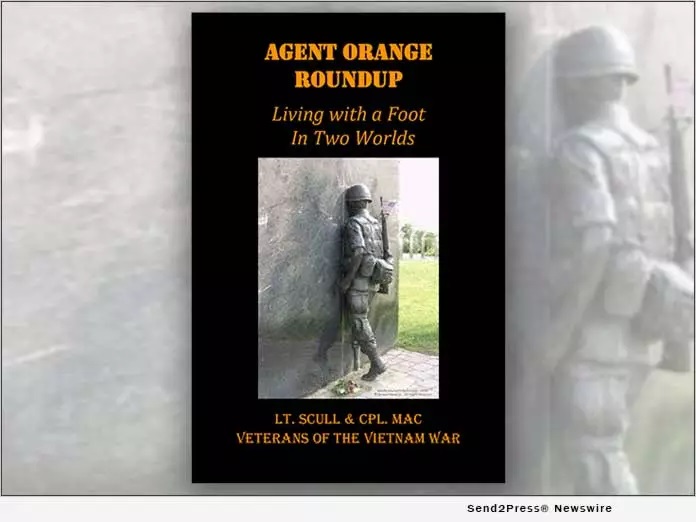
Lieutenant Sandy Scull and Corporal Brent MacKinnon are two Marines who served in Vietnam from 1966 to 1968. They endured and survive the war, they made it back to their homes, and then began to struggle – like many other veterans – with their demons and the ghosts from the past. They pursued with perseverance the goal of healing from the wounds of war and succeeded in their task. Therapy, poetry, storytelling, and active engagement with other veterans were the ingredients of a long story of positive reassessment of past, traumatic experience, until that unfortunate day in which they fell sick and sought medical aid, only to find out that the war had caught up with them once again in the most treacherous way. The diagnosed cancer that affected Sandy and Brent was quite beyond any doubt connected with their exposure to the infamous Agent Orange, the highly toxic dioxin-based defoliant manufactured by big corporations such as Dow and Monsanto that was largely spread all over Vietnam during the war up to 1971.
“One foot in two worlds” is just a hint of what these men really went through. The world of war, which engulfed their youth, became a time of barren memories to exorcise through therapy and poetry as soon as they went back home. This was the other world, where they built new lives and turned the traumatic experience of Vietnam upside-down to make some sense out of it, to help others. Sandy Scull writes: “Many veterans experienced soul loss in Vietnam. The good news is that soul is recoverable by living fully into the days we have left.” Healing the wounds of the soul was their task, until a new challenge turned up, one that was much more difficult to deal with and that also reawakened some ghosts from the past. As Sandy writes in “Now”: “It took 52 years for the bullet to find me.” The book that Sandy and Brent wrote brings together several forms of writing in a creative and critical way, as its purpose is not to entertain but to inform and to urge the readers to think about the things that happened in Vietnam and about their appalling legacy fifty years later. With different voices and tunes Sandy and Brent tell their ordeal and voyage: down to hell and up towards the light, as archetypes play a distinctive role in the poems of this book. Archetypes date back to the eve of human civilisation and still work for us as powerful means to make sense out of the mystery of life, death, and regeneration as in Brent’s prose “Monsoon”, in which he recalls his convalescence period spent in a Vietnamese village, tended by local peasants:
Something strange and wonderful was happening to me. The tough combat vet, now a helpless patient ten thousand miles from home, won over by the hearts and minds of peasants in a remote Vietnamese village. As a Marine, I was no good after that. The thought of shooting someone, anyone, belonged to a Self who no longer existed. I had been recruited and initiated into the human race. I now knew the real mission: To do as much good for the village in what time I may have left.
Brent also likes playing with the epic tone (of Biblical inspiration) in the poem “Horsemen of the Orange Apocalypse”, while in Sandy’s compositions there is more rarefaction, intimacy, and meditation. Trauma is the undergrowth and last horizon of this book. PTSD, or post-traumatic stress disorder is the technical definition of the syndrome that affects people like Sandy and Brent. Edward Tick, who authors the foreword to the book, calls PTSD “post-traumatic soul distress” and highlights that the authors of this book call themselves “Dead Men Walking”. Thus, he wonders: “What is it like to be killed in a war but live while that death takes decades to catch you? What is it like knowing your own government and its weapons killed you as you watch inevitable death slowly approach?” Such lack of social acknowledgment that sounds like a betrayal is the very fabric of trauma. The feeling that all the suffering and sacrifice was in vain triggers resentment and frustration in veterans. Tick adds that “healing for our veterans means restoring the social contract by which they protected us and in turn we tend and serve them. This is difficult and demanding and necessitates uninformed civilians willingly looking, seeing, feeling, admitting horrors and pains done in our names but out of our knowing.”
What strikes the most is the inner strength of these two men, who learned that the most appalling hardship may not be the worst, as Brent writes in “Cancer Stage 6”: “I am grateful for combat, / for the decades of lost years, / Self-imposed exile / Combat teaches just how bad / life can get and this / always calms me.” And Sandy, recalling the deeds of George Pollard (who was the unfortunate commander of the whaleship Essex that shipwrecked in 1830), writes in his poem “In the Wake” of 1970: “A comfort to me that Melville wrote: / Pollard had found a way to live on.” To find a new way is the task of all veterans returning home. Sandy writes that poetry can help to reach this goal, for “poetry is the language of the imagination and that can be the first casualty of war. Writing can redeem a more figurative sensibility and help us to forgive and face loss.” Brent too mentions the “healing power of writing”:
Here in America combat vets are invited to share the intimate details during individual and group therapy sessions. We tell part of our story in a circle of survivors with similar psychic injuries and they listen empathetically. Time is up, patients return to communities, families, jobs and friends who know only fragments and hear very little what happened to their citizen soldiers who have returned so deeply changed. They may never know. Is it any wonder that many veterans return and are destined to remain strangers and outsiders?
He adds that “while the majority of our warriors return without physical injury, the catastrophic nature of war often results in soul destruction: psychological and emotional collateral damage.” Telling, listening, understanding, and sharing. This is the way out of war and violence when it comes to re-integrate the returning veterans, no matter whether their ideas may sound awkward if not even wrong. A just society allows its members to share and discuss all opinions, which is the reason why Brent writes:
We and others are not the same person who left for WWII, Korea, Vietnam, Iraq, or Afghanistan. When ready, the sharing of a memoir, a poem or a short story with family and friends brings new understanding of the returning warrior. His or her reintroduction into community will begin with those who have been waiting to hear what happened and who we are now.
Reading their poems and listening to their stories paves the way toward understanding and actual reconciliation between the warriors who return carrying the ugly burden of violence and dehumanisation, and their communities that must listen very hard and make any effort to understand what it means to be involved in a war.
However, in a complicated world such as ours, things are never that plain as we would like them to be: war is the dark side of economy and of “world politics”, which implies that companies that provide goods for our daily, wealthy lives, should continue to profit also from war and the destruction it causes. Chemical industries involved in the production of toxic gas used for chemical warfare are the very same that in peace produce effective drugs to protect our health and chemical products that make crops more abundant and resilient to parasites. Where is the limit, over which their statutory role becomes dangerous and perhaps criminal? If we imagine the statement “the train was on time”, we can attempt a Gedankenexperiment: if the train is bringing stocks of vaccine and food to a plague-ridden city, the statement conveys a morally just meaning. If the train, though, is deporting hundreds of people to an extermination camp, we would not call that a good story. So, the train’s punctuality is – as a merely technical state of affairs – neither good nor bad. It is the destiny of the humankind involved in its “being on time” that matters.
The authors of this book just ask their readers and society not to turn away their faces. They know that death has caught up with them, although fifty years later, and in fact they have inserted their own “pre-mortem obituaries” in the book. They denounce the fact that Bayer bought Monsanto, agreeing to pay millions of Euros to settle the claim of thousands of veterans and families who called for Monsanto’s liability for the damage done with Agent Orange. Brent, whose poetic voice sounds sometimes sarcastic and angry due to indignation, says in the poem “Vietnam Hangover”: “I got the news today. / My V.A. claim denied. / Fuck you / I don’t want money. / Just say you did It / Say you killed me with Agent Orange / Say you did It.”
This fine book reaches beyond the autobiographical and intimate sphere to touch upon such issues as chemical warfare and practices (like the “burn-pits” in Afghanistan and Iraq, or the use of OGMs) that put health and environmental equilibrium at risk. The two authors also know that their history is way more collective than it may seem, because the veterans affected by Agent Orange are hundreds of thousands, American and Vietnamese as well. Thus, the book also provides practical information for veterans and their families seeking after help, justice, and acknowledgement.
Primo Levi’s work presents an extraordinarily rich and articulated case of intertextuality. Being a curious, omnivorous, and asystematic reader, Levi explored multiple fields of knowledge – literary, scientific, historical, etc. – browsing between specialized and popular books and magazines, for reasons of research or pure entertainment, often approaching foreign cultures in the original language, driven by his eclectic curiosity and an intense desire to know and understand. Already fathomed in part by Levi himself in his anthology The Search for Roots (1981), his library remains however to be discovered. This volume intends to trace the features of a critical map of the grafts, intertexts and transplants that link Levi’s work to the books of others, by comparing it with twenty-one authors, in a “polyglot and multipurpose” gallery that includes classics such as Dante, Shakespeare, Leopardi, Baudelaire, and Carroll; authors of modern literature such as Kafka, Mann, and Calvino; and scientists such as Galileo, Darwin, Heisenberg, and Lorenz.
Table of contents
Domenico Scarpa: Prefazione xi Gianluca Cinelli e Robert S. C. Gordon: Introduzione 1
Parte I – Gli strumenti umani Antonio Di Meo: Primo Levi e William Henry Bragg 19 Mario Porro: Primo Levi e Galileo Galilei 37 Patrizia Piredda: Primo Levi e Werner Heisenberg 55 Alberto Cavaglion: Primo Levi e Giuseppe Gioachino Belli 73 Enzo Ferrara: Primo Levi e Stanislaw Lem 87 Stefano Bartezzaghi: Primo Levi e Lewis Carroll 107
Parte II – La condizione umana Vittorio Montemaggi: Primo Levi e Dante 127 Valentina Geri: Primo Levi e William Shakespeare 143 Simone Ghelli: Primo Levi e Pierre Bayle 161 Martina Piperno: Primo Levi e Giacomo Leopardi 179 Damiano Benvegnù: Primo Levi e Konrad Lorenz 197 Pierpaolo Antonello: Primo Levi e Charles Darwin 215
Parte III – Comprendere e narrare il Lager Charles L. Leavitt IV: Primo Levi e Elio Vittorini 237 Uri S. Cohen: Primo Levi e Vercors 255 Sibilla Destefani: Primo Levi e Charles Baudelaire 273 Stefano Bellin: Primo Levi e Franz Kafka 287 Davide Crosara: Primo Levi e Samuel Beckett 305
Parte IV – La ricerca di sé Martina Mengoni: Primo Levi e Thomas Mann 327 Gianluca Cinelli: Primo Levi e Herman Melville 345 Mattia Cravero: Primo Levi e Ovidio 361 Marco Belpoliti: Primo Levi e Italo Calvino 381
The title of this symposium makes reference to a paper presented on the 29th of November, 1914, at the School of Paleography, Diplomatics and Archival Science of the State Archives of Milan by Giovanni Vittani, who would become the director of that institution in 1920 until 1938. Clearly, a few months after the outbreak of the First World War, this subject was of great topical interest. Vittani discussed the heavy losses suffered by archives in Italy and abroad in the course of history, due to wars, revolutions and revolts. He concluded his speech stating that the only way of minimizing the destruction of archives, apart from international laws and sanctions, would be the development of a true «public interest»: only «when
will be universally known for why they exist, that is, to everyone’s advantage, to the harm of no one, it will be inconceivable that anybody would think to endanger them on purpose». But this was wishful thinking, as the State Archives of Milan itself, in the summer of 1943, when Milan was heavily bombed, lost a large quantity of documents.
Archival preservation was always at risk during wars and rebellions, but during the age of Napoleon considerable innovations were introduced in this field, as in many others, and we are still today familiar with them. In earlier regimes, archives either were voluntarily destroyed, or became the spoils of war for practical reasons, such as using their information in order to rule new territories or, vice versa, to deprive enemies of the same information. From the beginning of the 19th century to the present day, new direct or indirect causes of danger for archives have developed. As shown in the book Archivio del mondo. Quando Napoleone confiscò la storia, by Maria Pia Donato, it was Napoleon who wanted to create a «great archives of the world» by transferring to Paris, the capital of the new Empire, documents from all of the occupied countries for the sole purpose of symbolizing the birth of a new universal history. From that time on, the historical and symbolical importance of archives has transformed them into political instruments for confirming or discrediting the legitimacy of wars and rebellions fought in the name of a national identity or an ideology. Two hundred years after Napoleon’s death, the State Archives of Milan wishes to reflect on the theme of archives during wars and rebellions, aware of the fact that Vittani’s wish is still far from coming true, and that probably it will never come true. Wars of the third Millennium, which are also fought cybernetically, definitely refute the idea that archives are «to the advantage of all» and, above all, «of harm to no one». Two centuries after the death of the man who dreamed about the creation of a great universal archives, colossal corporations have succeeded in collecting and managing an enormous bulk of data which, as the new «archives of the world», may become powerful instruments for influencing people’s thought and actions, even to the point of fostering or stirring up new wars.
SCIENTIFIC COMMITTEE
Fabio Caffarena, Benedetto Luigi Compagnoni, Antonino De Francesco, Filippo De Vivo, Maria Pia Donato, Luciana Duranti, Pierluigi Feliciati, Andrea Giorgi, Marco Lanzini, Leonardo Mineo, Marco Mondini, Stefano Morosini, Stefano Moscadelli, Raffaele Pittella, Olivier Poncet, Stefano Vitali.
STRUCTURE
The symposium will be structured into 5 sessions, each one dedicated either to an historical period or to one of the themes listed below, depending on the proposals that will be submitted. Each presentation will last 20 minutes, followed by a 5-minute period for questions and answers.
SUBMISSIONS
The deadline for the submission of proposals is September 30th, 2020. Proposals will consist of an abstract, in English and Italian (400 words maximum), a curriculum vitae showing the speaker’s principal areas of expertise and research. Papers may be presented either in English or in Italian. For speakers who prefer to present in another language, a simultaneous translation will be provided, under the condition that the text of the paper be submitted well in advance of the event. However, an English or Italian translation of the paper will be required for publication in the Proceedings. Final papers may be presented in English or in Italian, with an indicative deadline for the submission by August 31st, 2021. The subsequent publication of the Proceedings with an international publisher is expected. E-mail for submissions: convegnoasmi2021@gmail.com.
THEMES
1 – Archives, wars, and diplomacy
Management, transformation, and creation of archives before, during or after a war;
How archivists and their profession change during war time;
Archives of diplomacy.
2 – Secret archives and public archives
Access to records and archives;
Archives as instrument of power;
Archives as instrument for exercising civil rights.
3 – Archives and “Empire”, Archives and “Nation”, Archives and “De-colonization”
Archives as symbols of power;
Archives as identity;
Archives during crises, revolts and transitional periods.
4 – Archives as “Instruments” and Archives as “Monuments”
The retention and/or disposition of archives in order to build an historical narrative;
The construction of archives (collections of autographs, correspondence, letters, oral sources, diaries, etc.; community archives);
Dismembered, dispersed, destroyed, migrated and removed archives / archives preserved deliberately or accidentally.
5 – Archives and technology
Archives as technological products and instruments;
Reliability and authenticity of archives in the era of cyber security and artificial intelligence;
Submission deadline for Issue n. 3 (2020): “Close Encounters in War and Post-Traumatic Stress Disorder”
In consideration of the impact of the current health emergency on the work of many scholars and colleagues, the editors of Close Encounters in War Journal have decided to extend the deadline for the 3rd issue of the journal: we invite the submission of articles of 6000-8000 words (endnotes included, bibliographical references not included in word-count: please see submission guidelines at https://closeencountersinwar.org/instruction-for-authors-submissions/) in English by 20th June 2020 (although we can allow a certain flexibility) by e.mail to ceiwj@nutorevelli.org. Decisions will be made by mid-July 2020, and the selected articles will undergo a process of double-blind peer-review. The authors invited to publish will have to submit their fully revised articles by 1st November 2020.



 Close Encounters in War